For patients with diabetes in North and South Carolina, foot care is a critical part of keeping not only your feet healthy, but also your body. The reality is that diabetic neuropathy and resulting ulcers lead to infections, and because of the loss of sensation brought on by neuropathy, you may not realize you have a serious problem until it’s too late.
When you partner with SmartStep Foot and Ankle for virtual care, your telehealth visit is an essential tool for instant assessment and rapid treatment. Dr. Lanier is a board-certified podiatrist and foot surgeon who understands exactly what to look for when monitoring the feet of diabetics. Our virtual visits can be another tool you can use to protect your feet and prevent serious side effects.
Utilizing Video to Monitor Diabetic Foot Conditions
In a traditional office, your podiatrist uses touch and temperature assessment. In our live video visits, we guide you through real-time protocols to gather the same critical diagnostic data, virtually. Your ability to provide high-quality visual and sensory information is the key to preventing serious complications.
While your doctor will guide you through the steps needed to gather the right data to make an accurate diagnosis, we want all of our patients to feel comfortable and prepared. To aid in this mission, here is the SmartStep guide to maximizing your live virtual diabetic foot exam:
Becoming Your Doctor’s Eyes
In addition to the development of ulcers and infections, neuropathy and poor circulation can lead to subtle but dangerous changes in the foot's appearance. During a telehealth appointment, we will guide you on how to adjust your setup during the live call to ensure we see exactly what we need.
The Real-Time Color and Skin Check
As discussed in our previous blog post, “Mastering the Virtual Foot Exam: Advanced Camera Techniques for Your SmartStep Telehealth Appointment”, use diffused daylight from a window or a neutral daylight LED bulb (5000K-6500K). Yellow light masks redness, and harsh shadows hide skin breaks. Your doctor needs to see true color and texture.
Mirror Techniques
It can be challenging to film the sole of your foot accurately without help. In order to get the results we need without causing undue stress, use a small, shatterproof hand mirror instead.
We will guide you on camera angles and mirror placement in real-time to ensure a complete, 360-degree inspection of your sole, between your toes, and around the heel, which is one of the most common sites for ulceration.
Checking for Edema (Swelling)
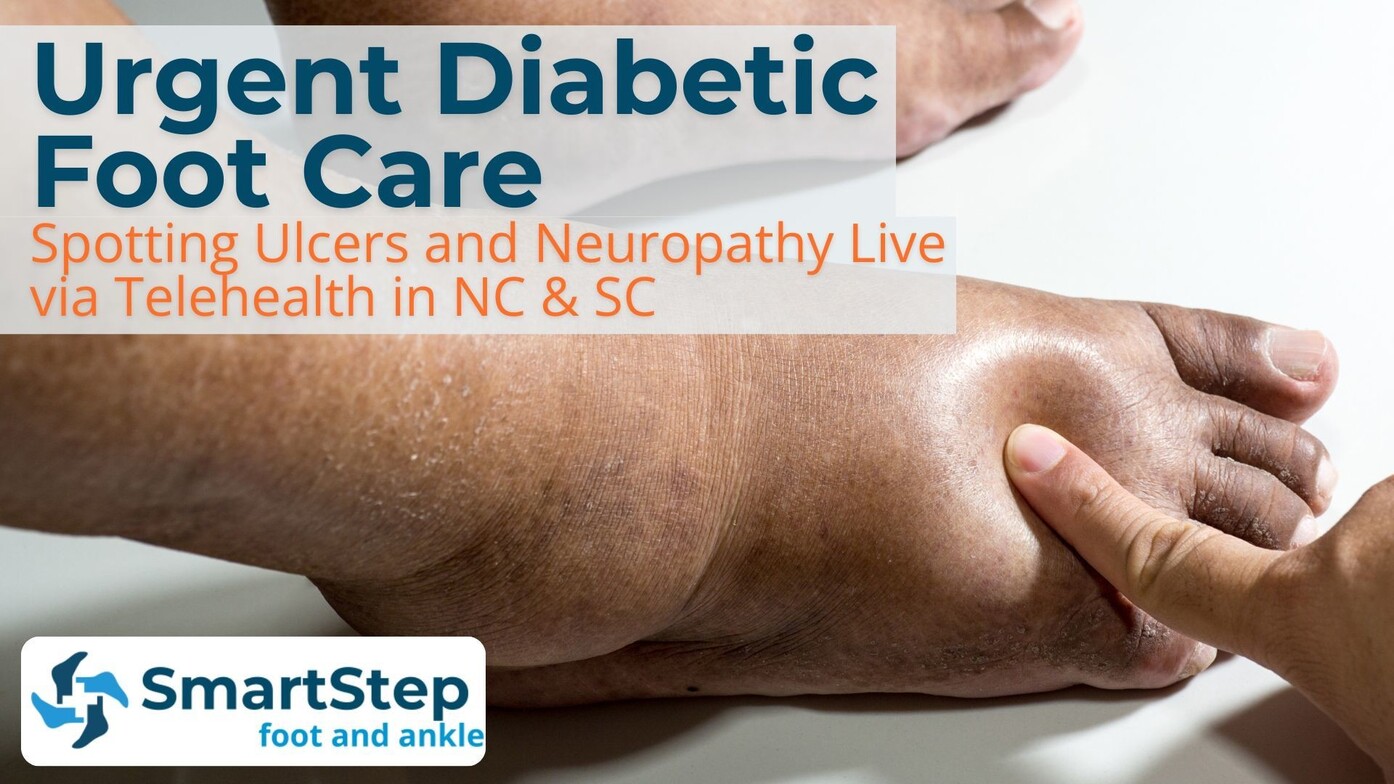
You should also be ready to gently press your thumb into any swollen areas while on camera. While we cannot physically feel the depth, we can observe the presence and speed of "pitting" (the indentation left by the pressure) to visually gauge the severity of the edema.
Urgent Ulcer Protocols for Measuring Severity
If you have a known or suspected open sore, precision is of the utmost importance during a telehealth visit. Before your appointment, we urge you to ensure your phone's camera is clean. If possible, familiarize yourself with the zoom function before the call starts as well as the tap-to-focus feature. These features will be used on the exact center of the ulcer in order to lock the camera focus on the depth of the wound, not the surrounding skin.
Tools to Measure Any Ulcers
As strange as it may sound, it may also be helpful for you to have a ruler and quarters (coins) available during your telehealth visit. A quarter acts as a visual benchmark for scale, and the ruler is used next to the wound as we view it live to accurately gauge the size and/or spacing.. These tools can also help us track healing or deterioration during followup appointments.
Real-Time Sensation Protocols to Check for Neuropathy
Diabetic neuropathy results in lost feeling, which is why injuries often go unnoticed, we typically have our diabetic patients aid the doctor in checking for sensation through a series of exercises.. While we can't perform standard monofilament testing virtually, we coach you through effective, safe at-home assessments to gauge sensation changes live on camera.
The Temperature Test
Have two small glasses ready: one with cool water and one with slightly warm water. While on camera, gently touch the bottom of your affected foot with the base of each glass and report the sensation immediately. This helps us assess the difference between cold and warm perception which can be a key indicator of sensory nerve health.
The Light Touch Test
We also sometimes employ a light touch test. This test can be done using a piece of soft fabric or other soft materials like a cotton ball or a makeup brush. While looking away from your foot to prevent visual bias, gently brush the item against different areas of your sole and toes. Report every time you feel the sensation in your foot. This provides vital real-time feedback on your protective sensation.
The Balance Audit
With the camera focused on your full body plus feet, we will guide you through simple balance exercises, such as standing on one foot or tandem walking in a heel-to-toe fashion. Loss of balance can be a significant sign of proprioceptive loss related to advanced neuropathy.
Preparation for Immediate Action
When a diabetic foot issue is detected, speed is everything. Our telehealth model is built for rapid response in North and South Carolina.
The 5-Minute Pre-Load Protocol
Before your session, log into our secure patient portal. Ensure your current preferred pharmacy and location is confirmed, along with any other current providers. This allows your SmartStep podiatrist to issue prescriptions for antibiotics or wound care supplies immediately, without administrative delays.
Know Your Next Step
If we determine a wound is serious, your SmartStep podiatrist is prepared to coordinate with your primary care physician (PCP) or refer you to an in-person wound care center within your local NC or SC network, often within the same business day.
Schedule Your Visit With SmartStep Foot and Ankle for Diabetic Foot Care in the Carolinas
SmartStep Foot and Ankle specializes in providing accessible, high-quality diabetic foot care wherever you are in North and South Carolina. Plus, we offer onsite podiatry services in the Charlotte, NC, region.
Don’t hassle with the drive and long wait at a podiatrist’s office. Click here to schedule your essential diabetic virtual foot exam right now!
Thurmond Lanier
Contact Me