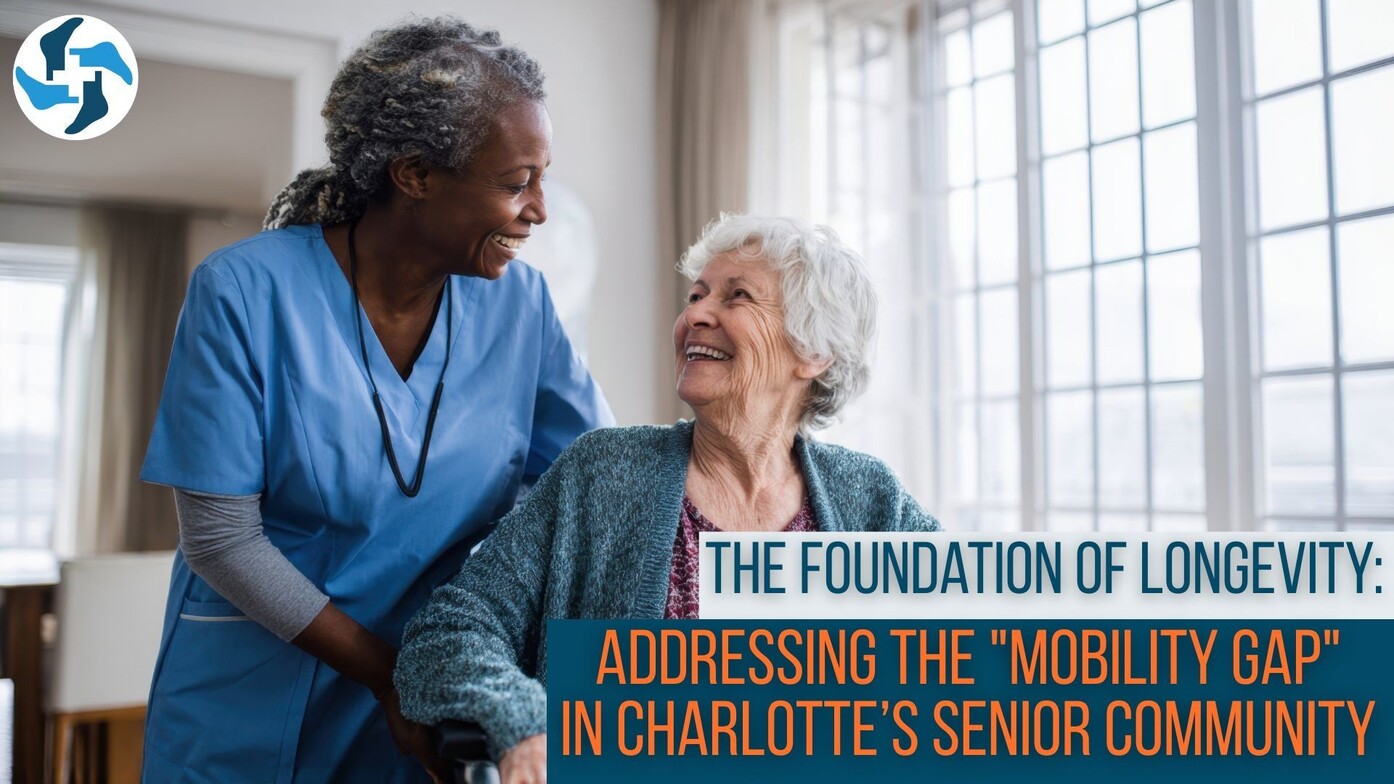
2026 is here! While there's a lot to look forward to in the new year, the conversation around health often revolves around high-impact resolutions. But as a podiatrist with a background in Public Health, I find myself looking at a different metric for my senior patients in the Charlotte Metro: the "Mobility Gap."
This gap is the difference between a senior's desire to stay active in our community (walking through Freedom Park or navigating a Food Lion grocery store) and the physiological changes in their feet that begin to limit that independence. Understanding these changes is about more than just "foot care" as its a critical component of geriatric preventative medicine.
The Physiology of the Aging Foot
To understand why foot health is so vital for seniors, we have to look at the biology of aging. Your feet are complex mechanical structures containing 26 bones and 33 joints. Over decades, these structures undergo predictable transformations that, if ignored, can lead to systemic health decline.
Below are some common examples of transformational changes seniors often face with age:
Fat Pad Atrophy: We are born with a natural shock absorber of adipose tissue on the balls and heels of our feet. Over time, this padding thins. This can lead to discomfort, but more importantly, it changes the way force is distributed through the metatarsals, often leading to secondary issues like stress fractures or chronic bursitis.
The "Silent" Risk of Neuropathy: For many seniors in the Charlotte community, particularly those managing diabetes, peripheral neuropathy can set in with time. This is a loss of sensation that can be dangerous because it masks pain. A small pebble in a shoe or a minor blister can go unnoticed, quickly evolving into a serious ulceration because the body’s alarm system is muted. Left untreated, serious infections can set in and threaten the overall health of affected seniors.
Connective Tissue Changes: Across the entire body, tendons and ligaments lose their elasticity with age. More specifically, the Achilles tendon often tightens with age, and this can limit the range of motion in the ankle. This decreased flexibility forces the body to compensate elsewhere, usually at the knees or the lower back. Seniors in the Charlotte area who experience these changes may notice its harder to get around due to pain or instability.
The Connection Between Podiatry and Fall Prevention
From a public health perspective, falls are one of the most significant threats to senior independence. What is often missed in the general conversation about balance is that stability begins at the base.
A painful ingrown toenail is an annoyance, but it can also cause antalgic gait. This is a fancy way of saying you change how you walk to avoid the pain. When you shift your weight to avoid a sore spot, you are intentionally throwing your body out of balance. In a senior, this subtle shift in biomechanics is often the root cause of a trip or stumble. By managing these minor foot issues, we are actually performing a high-level intervention in fall prevention.
Beyond the Clinic Walls: Why Onsite Care Matters for Charlotte Seniors
In my years practicing in the Charlotte Metro, a recrruing hurdle I've encountered when talking with older patients is the transportation barrier. When specialized care requires a senior or their caregiver to navigate traffic, large parking decks, and long corridors, the care is often delayed until it becomes an emergency.
Moving toward a model of onsite and home-based care offers conenivent, but we believe it also supports clinical outcomes. When a board-certified podiatrist can assess a patient in their own environment, we see things we might miss in a sterile clinic. For example, we can see the footwear you actually wear every day, the height of the rugs you navigate, and the ease (or difficulty) you have moving in their your space.
This "Standard of Care" approach ensures that seniors who may be vulnerable to the effects of agining feet, as well as seniors in independent living communities, assisted living communities, or private residences, receive the same level of expertise that anyone else would receive in a linical setting.
A New Year Perspective for Caregivers
We also want to touch on some notes for caregivers of seniors in the Charlotte area. If you are caring for an aging loved one in Charlotte, our advice for 2026 is to look down. Inspect the footwear of those under your care for uneven wear patterns, which can signal structural imbalances. Look for changes in skin color or temperature, which can signal circulation issues.
Education is the first step toward prevention. By understanding the unique challenges of the aging foot, we can work together to close the "mobility gap" and ensure our seniors stay active, stable, and independent.
Whether through a virtual telehealth consultation to examine a new concern or a comprehensive onsite clinical visit within the Charlotte area, our goal remains the same: helping you take a "Smart Step" toward long-term health.
Schedule your appointment now for same-day and next-day care with SmartStep Foot and Ankle!
Thurmond Lanier
Contact Me