
Loading. Please wait.

PHONE: (803) 620-1822EMAIL: support@smartstepfootandankle.comHOURS: MONDAY-THUR 08:30-4:30, FRI 8:30-3:30
photo-of-a-caregiver-in-Charlotte-looking-at-a-senior-podiatric-patient-and-smiling-1200x675.jpg

January 27, 2026 Fort Mill Podiatry News

2026 is here! While there’s a lot to look forward to in the new year, the conversation around health often revolves around high-impact resolutions. But as a podiatrist with a background in Public Health, I find myself looking at a different metric for my senior patients in the Charlotte Metro: the “Mobility Gap.”

This gap is the difference between a senior’s desire to stay active in our community (walking through Freedom Park or navigating a Food Lion grocery store) and the physiological changes in their feet that begin to limit that independence. Understanding these changes is about more than just “foot care” as its a critical component of geriatric preventative medicine.

The Physiology of the Aging Foot

To understand why foot health is so vital for seniors, we have to look at the biology of aging. Your feet are complex mechanical structures containing 26 bones and 33 joints. Over decades, these structures undergo predictable transformations that, if ignored, can lead to systemic health decline.

Below are some common examples of transformational changes seniors often face with age:

Fat Pad Atrophy: We are born with a natural shock absorber of adipose tissue on the balls and heels of our feet. Over time, this padding thins. This can lead to discomfort, but more importantly, it changes the way force is distributed through the metatarsals, often leading to secondary issues like stress fractures or chronic bursitis.

The “Silent” Risk of Neuropathy: For many seniors in the Charlotte community, particularly those managing diabetes, peripheral neuropathy can set in with time. This is a loss of sensation that can be dangerous because it masks pain. A small pebble in a shoe or a minor blister can go unnoticed, quickly evolving into a serious ulceration because the body’s alarm system is muted. Left untreated, serious infections can set in and threaten the overall health of affected seniors.

Connective Tissue Changes: Across the entire body, tendons and ligaments lose their elasticity with age. More specifically, the Achilles tendon often tightens with age, and this can limit the range of motion in the ankle. This decreased flexibility forces the body to compensate elsewhere, usually at the knees or the lower back. Seniors in the Charlotte area who experience these changes may notice its harder to get around due to pain or instability.

The Connection Between Podiatry and Fall Prevention

From a public health perspective, falls are one of the most significant threats to senior independence. What is often missed in the general conversation about balance is that stability begins at the base.

A painful ingrown toenail is an annoyance, but it can also cause antalgic gait. This is a fancy way of saying you change how you walk to avoid the pain. When you shift your weight to avoid a sore spot, you are intentionally throwing your body out of balance. In a senior, this subtle shift in biomechanics is often the root cause of a trip or stumble. By managing these minor foot issues, we are actually performing a high-level intervention in fall prevention.

Beyond the Clinic Walls: Why Onsite Care Matters for Charlotte Seniors

In my years practicing in the Charlotte Metro, a recurring hurdle I’ve encountered when talking with older patients is the transportation barrier. When specialized care requires a senior or their caregiver to navigate traffic, large parking decks, and long corridors, the care is often delayed until it becomes an emergency.

Moving toward a model of onsite and home-based care offers convenient, but we believe it also supports clinical outcomes. When a board-certified podiatrist can assess a patient in their own environment, we see things we might miss in a sterile clinic. For example, we can see the footwear you actually wear every day, the height of the rugs you navigate, and the ease (or difficulty) you have moving in their your space.

This “Standard of Care” approach ensures that seniors who may be vulnerable to the effects of aging feet, as well as seniors in independent living communities, assisted living communities, or private residences, receive the same level of expertise that anyone else would receive in a clinical setting.

A New Year Perspective for Caregivers

We also want to touch on some notes for caregivers of seniors in the Charlotte area. If you are caring for an aging loved one in Charlotte, our advice for 2026 is to look down. Inspect the footwear of those under your care for uneven wear patterns, which can signal structural imbalances. Look for changes in skin color or temperature, which can signal circulation issues.

Education is the first step toward prevention. By understanding the unique challenges of the aging foot, we can work together to close the “mobility gap” and ensure our seniors stay active, stable, and independent.

Whether through a virtual telehealth consultation to examine a new concern or a comprehensive onsite clinical visit within the Charlotte area, our goal remains the same: helping you take a “Smart Step” toward long-term health.
Schedule your appointment now for same-day and next-day care with SmartStep Foot and Ankle!


photo-of-Dr-Thurmond-Lanier-of-SmartStep-Foot-and-Ankle-along-with-text-1200x675.jpg

January 13, 2026 Fort Mill Podiatry News

If you’ve searched for foot and ankle care in the Charlotte area, you’ve likely come across the name Dr. Thurmond Lanier. As the founder and medical director of SmartStep Foot and Ankle, Dr. Lanier has built a reputation for combining high-level surgical expertise with a deeply personal, patient-centered approach.

We sat down for a “virtual interview” with Dr. Lanier to discuss his background, his passion for podiatry, and how SmartStep is expanding care across North and South Carolina through innovative telehealth technology.

Q: Dr. Lanier, you have quite an impressive academic background. From biology to public health and teaching, you’ve done a lot. How do these different disciplines influence how you practice medicine today?

Dr. Lanier: “I’ve always believed that to be a great doctor, you first have to be a great student and a great communicator. My Master’s in Teaching from the University of South Carolina really taught me how to break down complex medical concepts so my patients actually understand their diagnosis.

My Master of Public Health (MPH) gives me a broader perspective on community wellness. I don’t want to just look at a foot injury in isolation. Instead, I look at how we can improve access to care for everyone in the Charlotte Metro and across the Carolinas. Whether I’m performing a complex reconstructive surgery in the Gastonia region or treating a fungal infection in Myrtle Beach via a telehealth call, my goal is always the same: helping patients regain their mobility and live pain-free.”

Q: SmartStep has become a leader in the Charlotte Metro for onsite care. What can patients expect when they visit you in person?

Dr. Lanier: “When you come to see us for an onsite podiatry visit in Charlotte, you’re getting state-of-the-board-certified care in a comfortable environment. We specialize in the full spectrum of podiatry, including sports injuries, chronic heel pain, and advanced reconstructive surgeries.

We pride ourselves on providing onsite foot care in the Charlotte region, meaning we come to you. Whether you’re at home, a workplace, an assisted living facility…we provide care where it’s most convenient for you.

Charlotte is my home. It’s where I live with my wife and four children. When I see a patient in the area, I’m seeing a neighbor. We make sure that our onsite care is efficient but never rushed. We want to ensure that every ‘Smart Step’ you take toward recovery is backed by open communication and a personalized recovery plan.”

Q: You’ve been a big advocate for telehealth. How are you using this to help patients in both North and South Carolina?

Dr. Lanier: “This is something I’m incredibly passionate about. Foot pain doesn’t care about state lines or busy schedules. By offering telehealth services in both North Carolina and South Carolina, we’ve removed the barriers to specialized podiatric care.

Many people don’t realize how much we can accomplish virtually. Whether it’s an initial consultation for a sports injury, a follow-up on a surgical site, or managing a chronic condition like gout, telehealth allows me to see patients where they are most comfortable.

It’s a ‘smart step’ for someone in rural North Carolina who needs an expert opinion but can’t make the drive to Charlotte, or for a busy professional in the city who needs a quick check-in during their lunch break. It’s also the perfect companion to our onsite services in the Charlotte area.”

Q: We know you’re a big sports fan. Does that influence your work as a podiatrist?

Dr. Lanier: “Absolutely! As a die-hard Carolina Panthers and South Carolina Gamecocks fan, I spend a lot of time at stadiums and sporting events. I see the ‘fancy footwork’ on the field, but I also see the toll it takes on the body.

Understanding the mechanics of an athlete helps me treat my weekend warriors and student-athletes more effectively. I know how important it is to get back on your feet. Whether you’re competing on the field or just walking through the Mint Museum or Windy Hill Orchard with your family, having strong, healthy feet is a must!”

Q: What is the most rewarding part of your job?

Dr. Lanier: “It’s the moment a patient realizes they can walk without pain again. Whether we achieved that through a custom orthotic or a guided recovery plan initiated via telehealth, seeing that transformation is why I founded SmartStep Foot and Ankle. We are here to ensure that every patient in the Carolinas can keep moving forward.”

Are you struggling with foot or ankle pain? Whether you prefer an in-person visit in the Charlotte Metro or you prefer the convenience of a telehealth appointment anywhere in NC or SC, Dr. Lanier and the SmartStep team are ready to help.

Book your appointment today and regain control over your mobility and your life!


a-photo-showing-a-pair-of-diabetic-feet-with-text-1200x675.jpg

December 23, 2025 Fort Mill Podiatry News

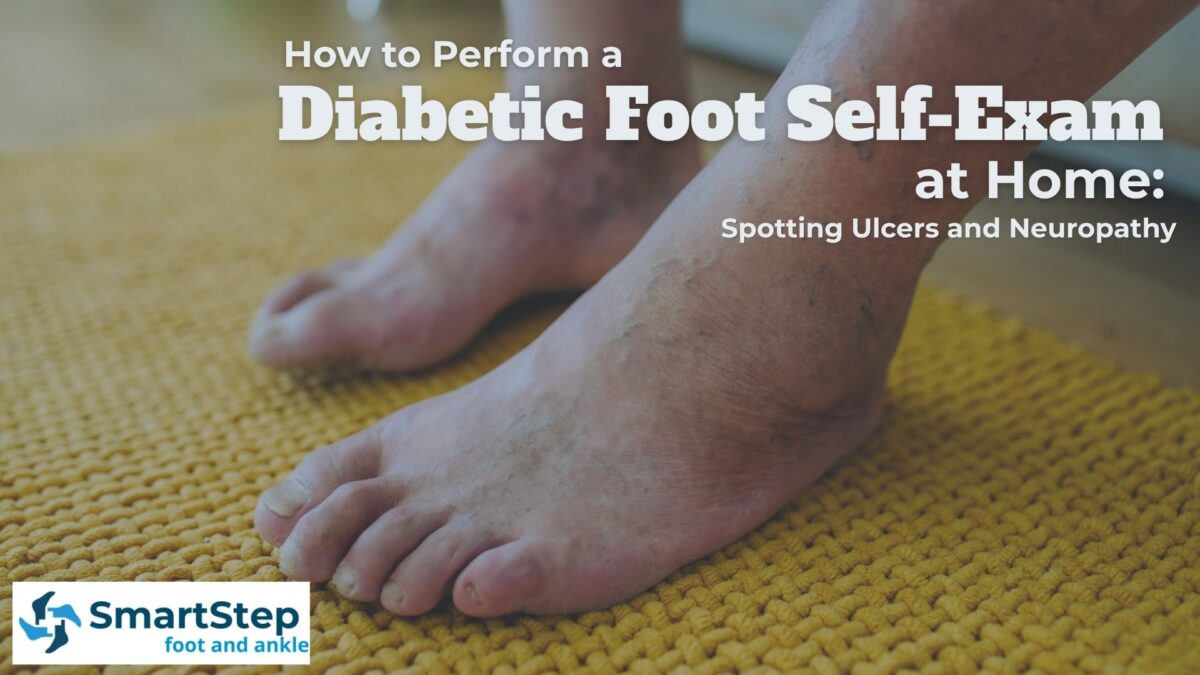
For patients living with diabetes across Fort Mill, Tega Cay, Rock Hill, and South Charlotte, routine foot care is an essential line of defense. Diabetic neuropathy and reduced circulation can make even minor skin breaks or small blisters dangerous. Because neuropathy dulls sensation, a small irritation can rapidly progress into an infected ulcer before you even realize a problem exists.

At SmartStep Foot and Ankle, we emphasize early detection, proactive home monitoring, and immediate, same-day and next-day care. Dr. Thurmond Lanier is a board-certified podiatrist and foot surgeon who specializes in diabetic limb preservation, advanced wound debridement, and offloading using custom orthotics and other advanced treatment options.

Here is our guide to conducting effective daily diabetic foot checks at home and knowing when to seek immediate, specialized care at our practice in Fort Mill.

How to Perform a Comprehensive Daily Foot Audit at Home

Routine daily inspection is the single most effective way to catch diabetic foot complications before they escalate into serious infections or hospital visits. Make it a habit to check your feet every evening using this step-by-step protocol:

photo of a handheld mirror lying on a tray
Use a handheld mirror to get a good view of the bottoms of your feet

Check Your Soles and Heels Using a Mirror

Getting a good view of the bottom of your foot can be difficult, especially if you have mobility challenges. Thankfully, you can use mirrors to get a better angle. To do this, sit in a well-lit room. Ideally, you will want nearby natural light from a window. If this isn’t an option, try to use a clear daylight LED bulb nearby.

Using a small, hand-held mirror positioned beneath your foot, take your time and look closely for red spots, friction rubs, small calluses, or broken skin along the ball of the foot and the heel. These spots can be subtle at first, but over time, they can turn into open wounds.

You also need to inspect between every toe for fungal buildup, skin peeling, or moisture cracks. Use the mirror to look at the bottom of your toes and webbing while visually inspecting the top.

The Real-Time Color and Skin Check

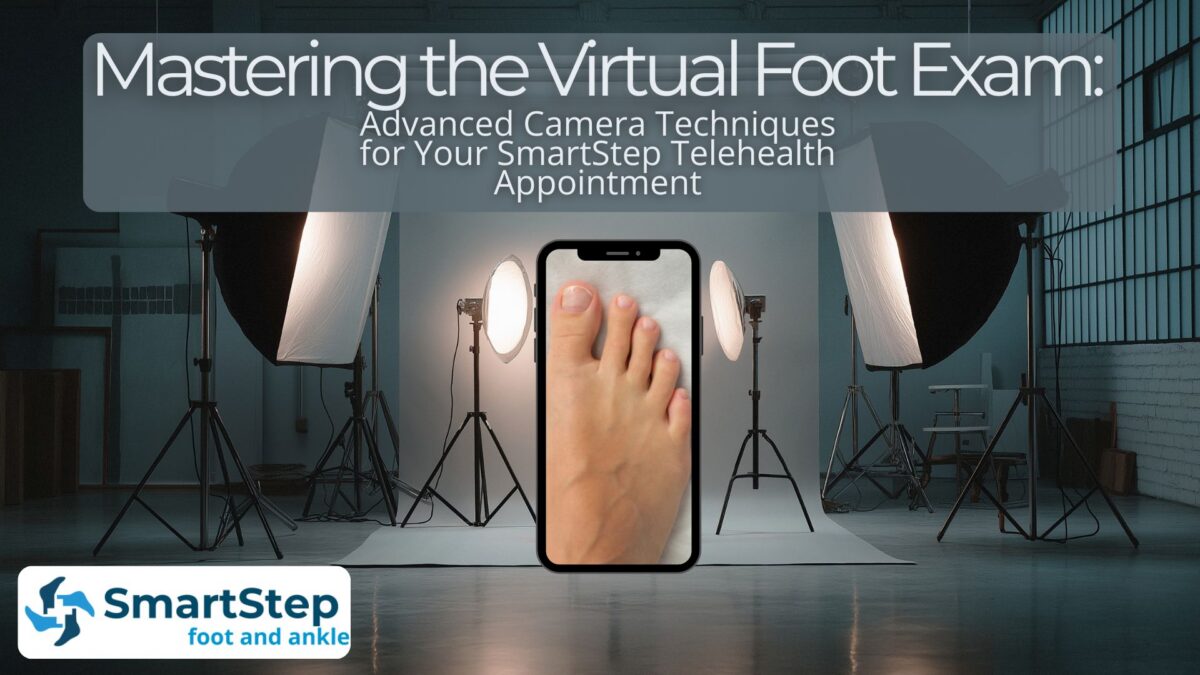
As discussed in our previous blog post, “Mastering the Virtual Foot Exam: Advanced Camera Techniques for Your SmartStep Telehealth Appointment”, use diffused daylight from a window or a neutral daylight LED bulb (5000K-6500K). Yellow light masks redness, and harsh shadows hide skin breaks. Your doctor needs to see true color and texture.

Mirror Techniques

It can be challenging to film the sole of your foot accurately without help. In order to get the results we need without causing undue stress, use a small, shatterproof hand mirror instead.

We will guide you on camera angles and mirror placement in real-time to ensure a complete, 360-degree inspection of your sole, between your toes, and around the heel, which is one of the most common sites for ulceration.

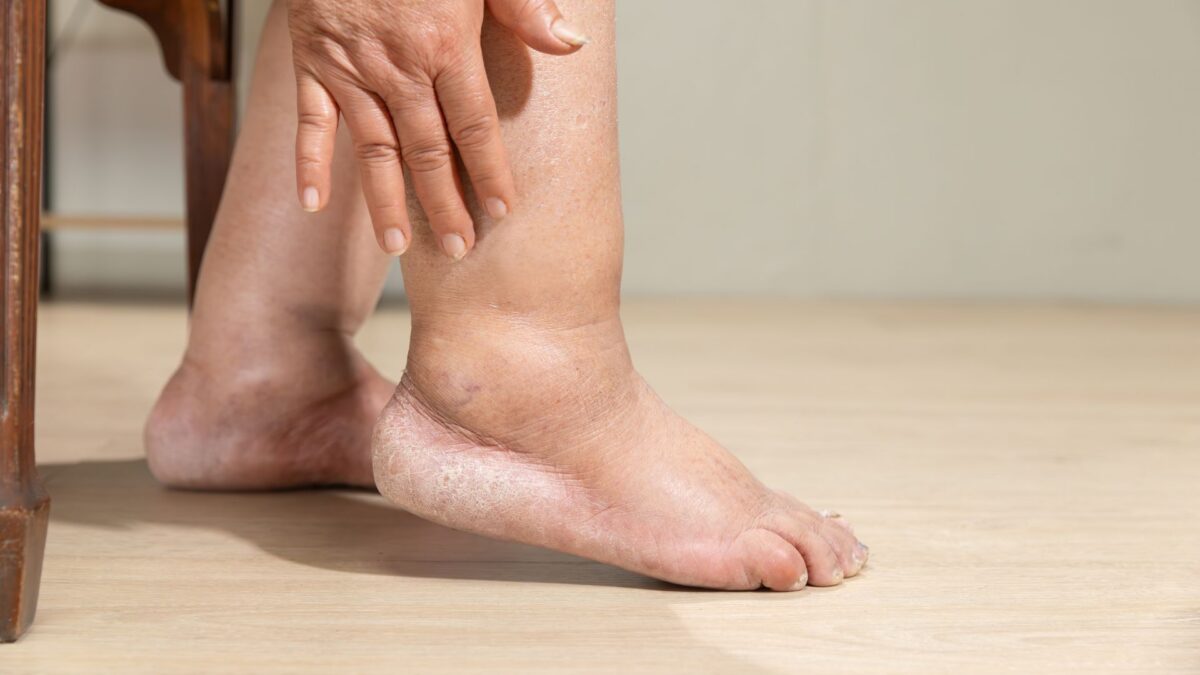
photo of a diabetic foot with edema
Edema is a classic symptom affecting the feet of people with diabetes

Visual Edema & Circulation Check

When fluid pools beneath the skin, this is called edema. It is the result of poor arterial blood flow that often accompanies diabetic neuropathy.

To measure whether edema is present, press your thumb gently into any swollen area near your inner ankle or top of the foot for five seconds. If your thumb leaves an indentation that takes several seconds to fill back in, your tissues are retaining fluid that can strain your skin.

You also need to be mindful of the color of your skin when performing this check. Look for localized redness or areas of skin that appear dark purple. Some diabetics will experience paleness when the foot is elevated, and this can be a sign that you’re experiencing a compromised vascular system.

Sensation & Temperature Tests for Neuropathy

Diabetic nerve damage typically affects peripheral sensation long before pain is felt. What this means is that things like light touch and temperature changes may not be felt.

To test your sensitivity at home, gently touch the bottom of your foot with something cool/ Something like a clean glass of water can work. You can also try to touch something slightly warm to your foot. If you struggle to differentiate between hot and cold, your protective nerve sensation is impaired. This puts you at higher risk for wounds that go unnoticed.

You can also use objects like cotton balls to test for sensitivity to touch. Close your eyes and gently brush a soft cotton ball across your toes and arch. If you cannot feel the soft touch, you should avoid walking barefoot until you can be checked by a podiatrist.

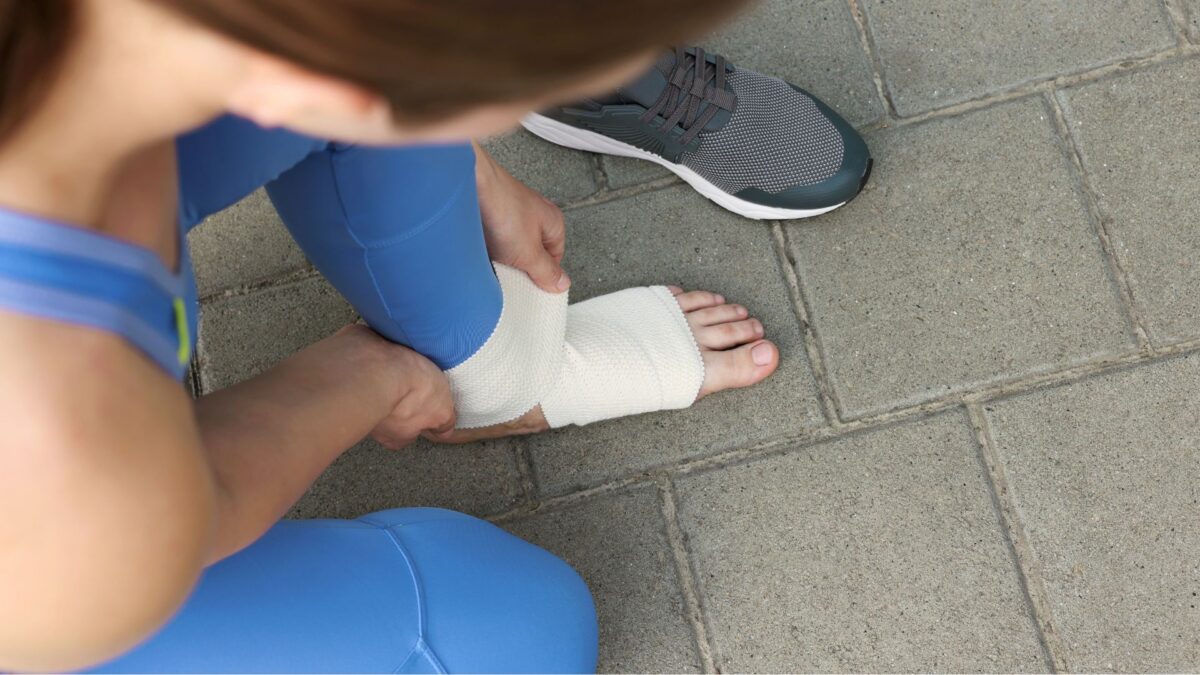
photo of a foot wrapped in a protective bandage
It’s a good idea to wrap a foot affected by an open sore with a clean bandage until your podiatrist appointment

If You Notice an Open Sore

If you notice an open sore, a draining blister, or a break in the skin, taking action quickly can mean the difference between a fairly minor concern and a major medical issue. Diabetic ulcers can deteriorate quickly if you continue to put weight-bearing pressure on them or have unmanaged bacterial exposure.

If possible, use a small ruler to measure the approximate diameter of the sore. You can also use an object like a coin to get a rough idea of the scale. It’s also a good idea to take a phot of the sore for your records and to show Dr. Lanier when you come in for your visit.

Until you’ve had a visit with your podiatrist, avoid using any type of chemicals on or around the sore. You should also avoid using razors or any other sharp objects near the sore. You can, however, bandage the area with a clean, dry sterile bandage. When putting on shoes, avoid overtightening.

Immediate, Local Care When You Need It Most in Fort Mill, SC

When a diabetic foot issue arises, delaying professional treatment is one of the worst things that can happen. That’s why SmartStep Foot and Ankle is structured to deliver fast specialist care with same-day and next-day appointments available.

Instead of facing the exhaustion and risk of navigating massive hospital complexes or long emergency room stays, our Fort Mill office offers accessible, ground-level care with zero parking deck friction. We provide:

  • Advanced Sharp Debridement & Sterile Dressings: Professional removal of unhealthy tissue to jumpstart cellular healing in a sterile, low-stress environment.

  • Custom Biomechanical Offloading & DME Fitting: Fitting specialized footwear, medical devices, and custom orthotics to relieve pressure on healing wounds.

  • Direct Coordination with Your Primary Care Team: Fast communication with your primary physician, endocrinologist, or vascular specialist to ensure your systemic health is fully supported.

Protect Your Foundation with SmartStep Foot and Ankle

Don’t wait until a minor sore, calloused pressure point, or persistent numbness turns into a complex medical emergency. Whether you need a routine diabetic foot evaluation, custom diabetic orthotics, or urgent wound care, Dr. Lanier and the team at SmartStep Foot and Ankle are here to support your mobility.

Located right in Fort Mill, SC, we proudly serve families and patients across York County, Tega Cay, Rock Hill, Lancaster, and South Charlotte.

Take a proactive step for your foot health. Schedule your diabetic foot evaluation at SmartStep Foot and Ankle today through our convenient online scheduling platform!


graphic-showing-a-phone-screen-with-a-foot-and-text-1200x675.jpg

December 9, 2025 Fort Mill Podiatry News

At SmartStep Foot and Ankle, we believe that telehealth plays a large role in the future of foot care. For our patients across North and South Carolina, a telehealth visit is a powerful tool, but it’s much more than a simple video chat.

The fact is that In a virtual consultation, you become your podiatrist’s eyes. Because of this, it’s important to know how to get the most out of your visit.

While you don’t have to be the next Martin Scorsese, your camera skills and preparation can affect the quality of your diagnosis and the precision of your treatment plan. To help you achieve diagnostic-grade clarity, we’ve got some advanced tips used by professionals to ensure your virtual foot exam is as effective as an in-person visit.

Beyond Brightness: The Advanced Science of Lighting Your Foot

The single most critical factor in virtual podiatry is light. Poor lighting casts shadows that can completely mask subtle, yet critical, details like skin texture, mild swelling (edema), or the true depth of a wound.

Lighting becomes even more important when you’re working with a smartphone or other video-enabled device that has a low resolution. While 1080p video or even 4k can be great, lower resolutions tend to hide important details. Poor lighting conditions can make it even more challenging to get a clear image during a telehealth podiatry visit as issues like harsh shadows can cloud and distort what your podiatrist can see (or not see.)

Eliminating the Harsh Shadow Problem

Avoid the Overhead Offender: Never position your foot directly under a single ceiling fixture like a recessed can light. This casts deep shadows under the toes and around the ankle, and these are areas your doctor must inspect.

Diffusion is Key: Natural daylight offers the most color-accurate view, so we recommend conducting your visit in a room that has access to windows. Position your foot about three to five feet parallel to a large window. If the direct sun is too strong, hang a sheer curtain or sheet to diffuse the light, making it softer and minimizing severe shadows.

The Two-Light Strategy for Dimensionality

For the most professional video and the best chance for high-value diagnostics, aim for a simple two-light setup to eliminate conflicting shadows and add necessary depth:

The Key Light for Primary Illumination: Your main light source (e.g., a window or bright lamp). Position it directly in front of your foot or slightly off to a 45-degree angle.

The Fill Light for Shadow Reduction: This secondary light is crucial. Place it opposite the Key Light. It “fills in” the harsh shadows, helping reveal texture, subtle swelling, and areas of redness that would otherwise be lost. It’s ok if the fill light is not as bright as the key light, but you don’t want too much difference.

The Texture Reveal Technique

This advanced technique is key for identifying minor inflammation or changes in skin texture, especially on the sole of the foot:

The Setup: Turn off all major overhead lights. Use a small, directional light source like a desk lamp or a second phone’s flashlight.

The Position: Place the light source almost level with the foot and aim the beam directly across the surface.

The Result: When light scrapes across the skin this way, it can reveal subtle elevations or depressions, much like a doctor running their finger across the skin in person.

Focus and Contrast Tips

Color Temperature: Avoid older, yellow-hued bulbs when possible, as they mask redness. Use LED bulbs labeled “Daylight” (5000K–6500K) for the most color-accurate view.

Background Contrast: Always place your foot on a solid, neutral background (a white sheet, a plain towel, or a wooden floor). This prevents the camera from auto-focusing on patterns and allows your podiatrist to focus solely on your foot.

Your Device: The Three Pillars of Virtual Clarity

In addition to lighting, your camera work plays a large role in the success of a telehealth visit. As mentioned, you don’t need to be a Hollywood professional, and SmartStep Foot and Ankle can work with all types of smartphones, tablets, and laptops; however, we have some tips to help you master the right techniques when behind the lens.

1. Rock-Solid Stability

A jumpy or blurry image is going to make things difficult to see. We encourage you to mount or stabilize your camera whenever possible to avoid shaking, jitters, or excessive movement.

  • Pro Tip #1: Don’t just hold the camera; use household items as stable mounts. A stack of books or a small phone tripod ensures the image is rock-steady.
  • Pro Tip #2: If you must hold your device, try to brace your elbows on a table or counter to eliminate arm wobble. If your device has an auto-stabilization setting, make sure it’s turned on before your visit.

2. Targeted Focus

Before the call, test the use of your device’s tap-to-focus feature on the exact area of concern (e.g., the edge of the toenail, a callus, or a rash). This locks the focus and light exposure, preventing the camera from auto-adjusting mid-exam.

3. Connection Check-Up

Bandwidth Test: Don’t just rely on “good Wi-Fi.” Before your visit, use a free online speed test to ensure you have a quality connection that can transmit audio and video. We recommend a minimum of 2 Mbps upload speed as your doctor needs the clarity you are sending.

Audio Enhancement: Use wired earbuds or Bluetooth headphones with a built-in mic. This frees your hands for camera maneuvering and blocks ambient noise, ensuring your doctor hears your symptoms clearly and that you can communicate clearly.

Photo Backup: If you know your connection can be weak, take the “Essential Views” (below) as high-resolution photos before your appointment. You can then easily share them via our secure patient portal or hold them up to the camera if needed.

Essential Camera Views for Your Virtual Visit

A static, one-angle view of your foot is rarely enough for a complete diagnosis. Your doctor will typically need at least three critical categories of views to accurately assess mechanics, pain points, and surface details.

The Weight-Bearing Views Used for Assessing Mechanics

Foot problems often only manifest when the foot is under stress, so we may need to see it bearing your full body weight.

The Static Stance: Place your camera low to the floor. Stand with your feet shoulder-width apart and capture the foot from the front and the back. The rear view is crucial for assessing pronation (rolling inward) or supination (rolling outward).

The Dynamic Gait: This is the most valuable view. Have your device propped at ankle height. Walk away from the camera for two steps, then turn and walk toward the camera for two steps. This shows your doctor how your foot lands and rolls, providing essential clues about your biomechanics.

The Non-Weight-Bearing Views Used for Inspecting Detail

Once your foot is elevated and relaxed, we can check minute skin, nail, and joint issues.

The Dorsal View (Top): For this view, you will rest your foot flat and capture the top of the foot and ankle. This is essential for observing swelling and joint issues.

The Plantar View (Bottom): You will sit comfortably and cross the affected leg over the opposite knee, bringing the bottom (plantar surface) of the foot completely into the frame. Focus the camera on the heel, arch, and ball of the foot. This angle is critical for visualizing calluses, corns, warts, and arch breakdown.

The Comparative View to Establish a Baseline

Many issues involve subtle changes in color or size. If an issue only affects one foot, your healthy foot becomes the control group.

Put both feet side-by-side in the frame, ensuring they are equally well-lit and in focus. Seeing the healthy foot next to the affected foot provides an instant benchmark for your doctor to gauge the true severity of discoloration or the extent of swelling.

Ready for High-Fidelity Foot Care? Schedule Your Telehealth Foot Care Visit Today in North Carolina or South Carolina!

If you’re still concerned about getting the right views, don’t worry. At SmartStep Foot and Ankle, your doctor will guide you through the process, providing step-by-step instructions at your pace. Plus, our telehealth podiatry services mean that you can visit with your us in the privacy and comfort of your own home.

Schedule your visit with SmartStep Foot and Ankle in Fort Mill right now!


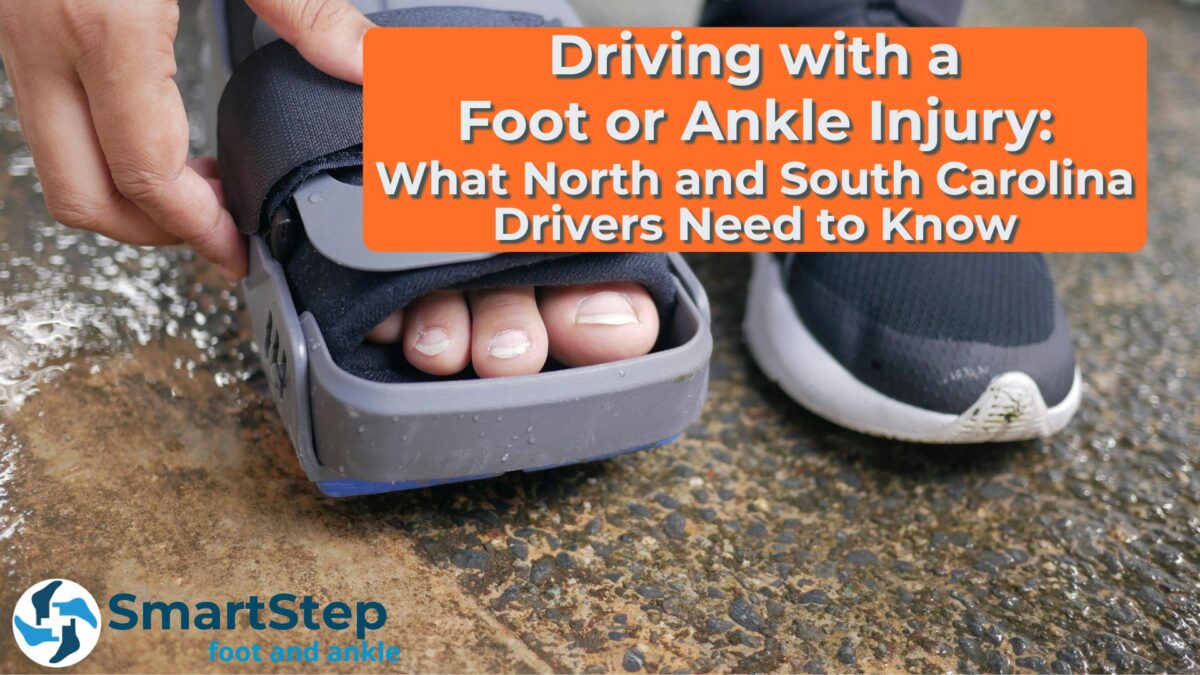
photo-of-a-foot-in-a-boot-with-text-1200x675.jpg

November 18, 2025 Fort Mill Podiatry News

When you suffer a foot or ankle injury, including sprains, fractures, or you’re recovering from surgery, one of the most pressing, immediate questions is: Can I drive?

The urge to maintain independence and manage daily life in North Carolina or South Carolina often pushes people to get back behind the wheel quickly, but is it safe to do so? Driving with a compromised foot or ankle is undoubtedly a safety concern, but it can also carry significant medical, ethical, and potential legal risks.

At SmartStep Foot and Ankle, we believe the fastest path back to your normal life (including driving) starts with making smart, safe choices. To help you make wise decisions, we’ve put together an informative guide on the factors you must consider before putting the key in the ignition:

photo of a left foot and a right foot with question marks
Does it make a difference in your ability to drive if you’ve had your right foot operated on versus your left foot?

The Crucial Right Foot vs. Left Foot Question

For most vehicles with automatic transmissions, the right foot operates the brake and accelerator, or the two pedals that control forward motion and stopping distance.

Injury to the Right Foot/Ankle

If your injury, cast, brace, or walking boot is on your right foot, you should not drive. An injured right foot cannot reliably generate the force, stability, or speed required to switch between the gas and brake pedals, especially in an emergency. The risk of delayed braking or accidental acceleration is too high.

Injury to the Left Foot/Ankle (Automatic Car)

If you drive an automatic vehicle, a left-foot injury may not prevent you from driving. However, the cast or boot can be bulky, potentially interfering with the pedals or distracting you. You must ensure the left foot doesn’t impede the operation of the right foot.

Injury with Manual Transmission

If you drive a stick shift, you should not drive with a left-foot injury as it is required to operate the clutch.

The bottom line? Any device (cast, boot, brace) that restricts the movement of your ankle and foot or adds bulk can dangerously delay your reaction time, which is the single greatest risk factor.

photo of a police car with its lights on at night
Knowing the law regarding safe driving can be the difference between getting a ticket or not.

Safety vs. Legality: The Rules in NC and SC

While North Carolina and South Carolina don’t have explicit statutes that say, “You cannot drive with a walking boot,” both states operate under a fundamental legal principle: Drivers have a legal duty to operate their vehicle with reasonable care and prudence, maintaining control at all times. (This is often referred to as a duty to exercise “ordinary care.”)

If you are involved in an accident in NC or SC and are found to have been driving with a clearly restrictive injury, cast, or boot, you could be deemed negligent.

If your impaired ability to brake or react is found to have contributed to the crash, you could face:

Negligent Driving Charges: This can lead to fines, points on your license, and increased insurance rates.

Insurance Complications: Your insurance provider could potentially deny coverage for the accident, claiming you were operating the vehicle in a way that impaired your ability to control it safely.

The safe and responsible choice always outweighs the legal minimum. Your insurance company and law enforcement will look at whether a “reasonable and prudent person” would have driven under the same circumstances.

photo of someone driving a vehicle taken from inside the cab
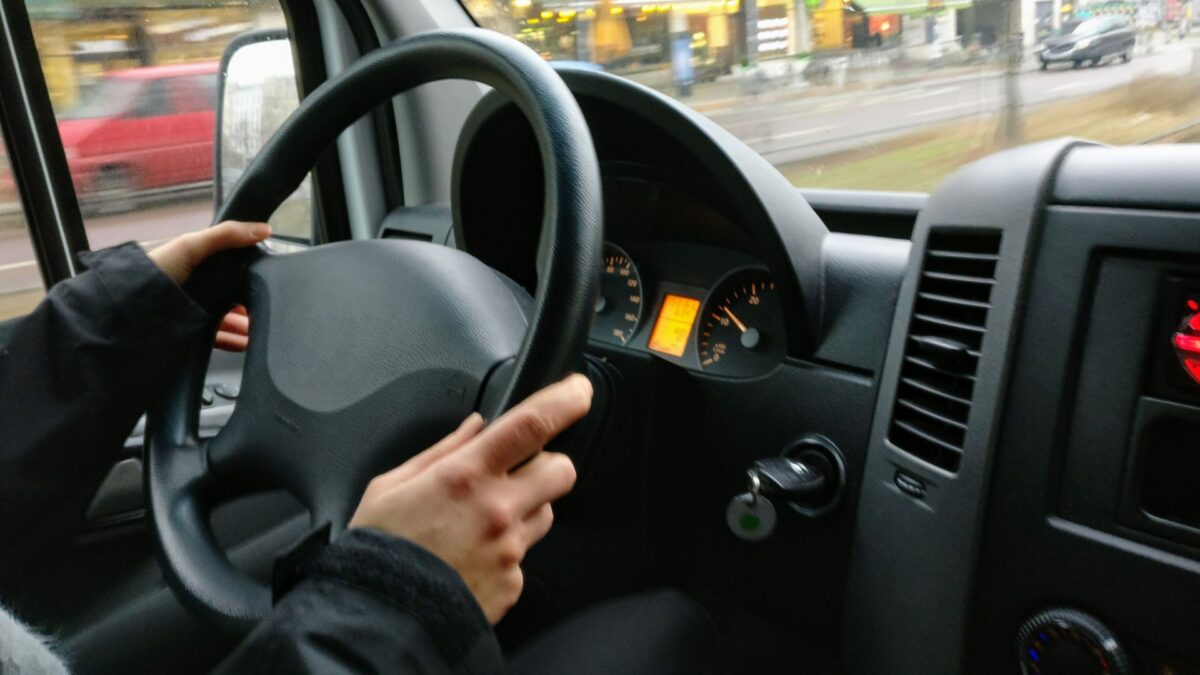
Aside from a medical boot, there can be a number of other factors that can cause distractions when driving after foot surgery.

Beyond the Boot: Hidden Driving Hazards

It’s not just the cast or boot that makes driving dangerous. Your internal healing process creates other risks you must consider:

Pain and Distraction

Foot or ankle pain is a powerful distraction. A sudden jolt or change in position can cause a sharp twinge of pain, which may cause you to briefly swerve or involuntarily remove your foot from the pedal. Even mild chronic pain dulls your concentration and slows reaction time.

Medications

Are you taking prescription pain medications? Most pain medications warn against operating heavy machinery, which includes your car. Driving while impaired by medication is illegal and severely reckless.

Strength and Range of Motion

Even after the cast or boot is removed, your foot and ankle muscles will be weak and stiff (a process called atrophy). Your reaction time will still be significantly slower than normal. A podiatrist can help you assess your post-immobilization readiness for driving.

Don’t Guess – Get a Professional Clinical Opinion

Deciding when it is safe to drive should never be a guessing game. It is a critical component of your overall recovery plan.

At SmartStep Foot and Ankle in Fort Mill, SC, an in-office evaluation with Dr. Lanier is the safest way to determine your readiness to drive. During a comprehensive evaluation, we can:

  • Assess Joint Range of Motion & Muscle Strength: Test whether your post-immobilization foot can reliably exert rapid braking pressure.

  • Evaluate Your Brace or Boot: Determine if your current support device restricts essential ankle movement or creates pedal interference.

  • Review Specific Driving Demands: Evaluate your vehicle type (automatic vs. manual) alongside your daily commute requirements.

  • Develop a Safe Return-to-Driving Strategy: Combine targeted rehabilitation, dynamic physical therapy modalities, and custom orthotics to safely transition you out of the boot and back into the driver’s seat.

Fast Appointments & Expert Sports Medicine Care in Fort Mill, SC

You shouldn’t have to navigate driving risks or delay your recovery alone. Located right in Fort Mill, SC, SmartStep Foot and Ankle provides rapid access, unhurried 1-on-1 consultations, and comprehensive foot and ankle care for active adults and families across York County, Lancaster County, and South Charlotte.

Ready to safely get back behind the wheel and resume your active lifestyle?

Schedule your evaluation with Dr. Lanier at SmartStep Foot and Ankle in Fort Mill today through our convenient online booking system!