Loading. Please wait.

photo-of-blue-and-white-shoes-standing-on-hard-asphalt-ground-with-text-1200x675.jpg

October 6, 2026 Fort Mill Podiatry News

When you’ve been serving patients with podiatry care as long as Dr. Lanier, you start to notice patterns. Different times of year tend to bring on the same foot and ankle conditions, and trends in footwear often cause spikes in certain conditions as well.

Changes in population behaviors can also be indicators for podiatric concerns. As Fort Mill continues to grow, our local community patterns shift starting in October heading into the Holiday Season.

Finally Catching a Break From the Heat

And this past summer has been really hot as we’ve endured weeks with temps in the mid-90s and above, driving a lot of people to remain indoors. With the weather finally starting to feel like fall outside, it’s only natural to see more people getting outdoors.

From weekend strolls through Baxter Village Town Center and fall pop-up markets to early holiday shopping at regional retail hubs and community events at Walter Y. Elisha Park, there’s no shortage of things to do in the area. And while all this outdoor activity is beneficial for your health, it can be hard on your feet, especially when it comes to hard surfaces. 

With a sudden increase in standing and walking on hard concrete, tile, and asphalt, people across Fort Mill, Tega Cay, and Indian Land may begin experiencing a very specific, sharp discomfort that can feel like a deep, bruised ache directly beneath the center of the heel bone.
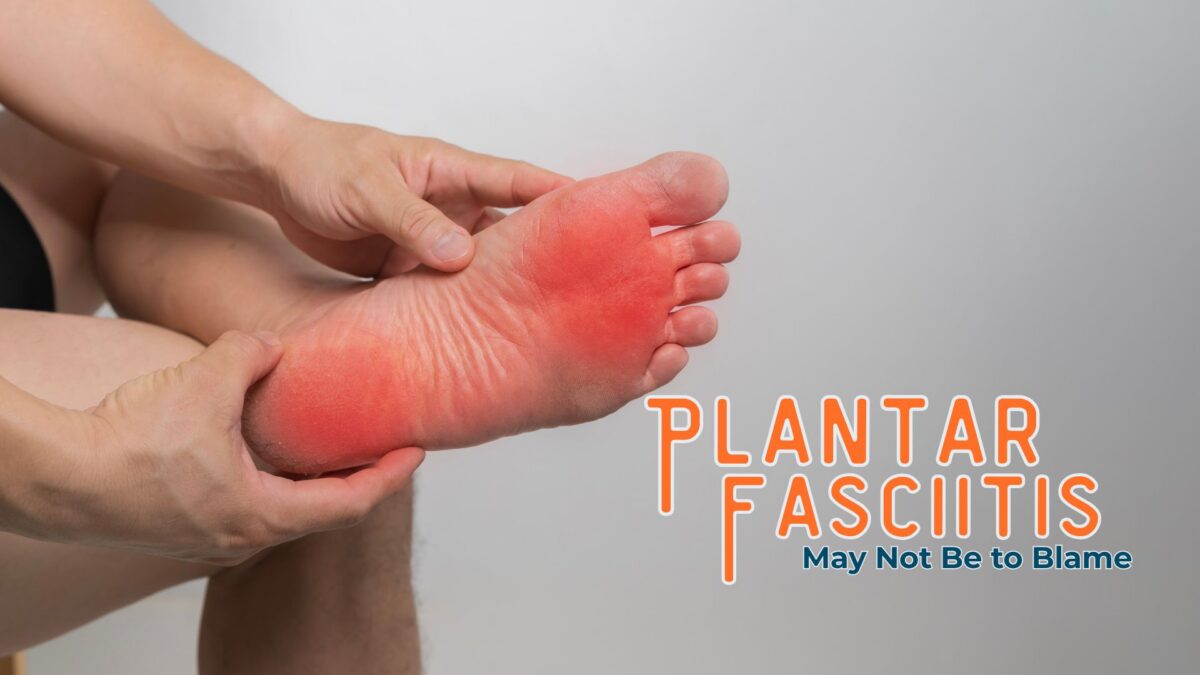
photo of a person holding a foot with an inflamed sole with text
Plantar fasciitis is often the cause of heel pain, but fat pad atrophy could be the culprit

It May Be Plantar Fasciitis, But It May Not

When this pain strikes, most people immediately assume they have developed plantar fasciitis. They buy generic arch support inserts or roll their feet over frozen water bottles.

Some watch YouTube videos or consult AI only to be told to spend weeks trying calf stretches. What they may find out, however, is that pushing hard on the heel only makes the throbbing worse.

Plantar Fat Pad Atrophy Could Be the Culprit

If your heel feels less like a tight rubber band and more like you’ve been walking directly on bare bone, you may be dealing with a completely different structural issue known as fat pad atrophy.

Understanding the difference between tissue inflammation and natural cushion loss is crucial to distinguish between plantar fasciitis and fat pad atrophy, but it can also be the key to getting lasting relief.

How to Spot the Difference Between Plantar Fasciitis and Fat Pad Atrophy

To understand why traditional heel pain treatments often fail for fat pad issues, it helps to look at how your heel absorbs impact.

Directly underneath your heel bone (the calcaneus) lies a specialized matrix of dense fatty tissue enclosed in tiny fibrous chambers. This plantar fat pad acts as your body’s natural shock absorber. Just like a shock absorber on your car, this pad provides cushioning for the massive impact forces generated every time your foot strikes the ground.
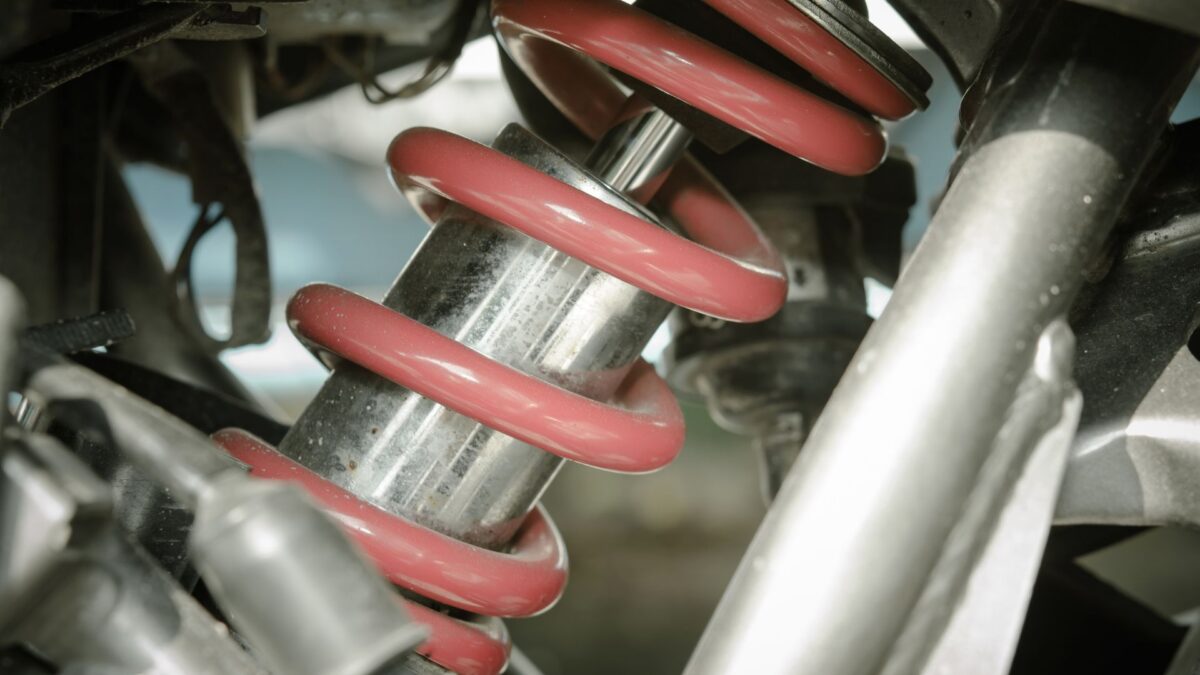
photo of a shock absorber in an automobile
The fat bad in your foot acts like a shock absorber in an automobile

Just Like a Car’s Shock Absorbers

While plantar fasciitis is an inflammation of the thick ligament band that runs along your arch, fat pad atrophy is the gradual thinning or displacement of this protective fatty cushion. And just like a shock absorber that’s gone bad, an atrophied fat pad means less cushioning between your foot and the ground.

When active adults spend hours standing or walking on unyielding surfaces like polished concrete store floors or hard pavement, a thinned fat pad loses its ability to protect the bone.

Below are some other ways to tell the two conditions apart:

Symptom Feature Plantar Fasciitis Fat Pad Atrophy
Primary Location Inner bottom edge of the heel, near the arch Direct center of the heel bone
Morning Pain Sharp, stabbing pain during the very first steps out of bed Mild ache in the morning that worsens as the day goes on
Response to Standing Improves slightly as the foot “warms up” Consistently worsens the longer you stand on hard floors
Direct Pressure Pressing the arch/heel junction triggers pain Deep, bruised ache when pressing directly on the center of the heel
Barefoot Walking Painful due to arch tension Extremely painful, feels like “walking directly on bone”


When fat pad thinning is mistaken for plantar fasciitis, exercises like calf stretching or wearing rigid, hard-plastic orthotics can actually press directly against the bone. Not only is this painful, but it can worsen tissue irritation and cause a vicious cycle to run over and over again.

What a Typical Patient Journey Looks Like

For many adults in York County, fat pad thinning begins with a subtle ache during a busy afternoon before turning into a daily barrier to staying active.

Consider a common scenario we see at our podiatry practice in Fort Mill: an active 58-year-old resident spends an October Saturday walking through local outdoor shops looking for early holiday gifts. Her day consists of hours spent standing on concrete floors, and by evening, her heels are throbbing with a sensation that feels bruised deep within the bottom of her foot.
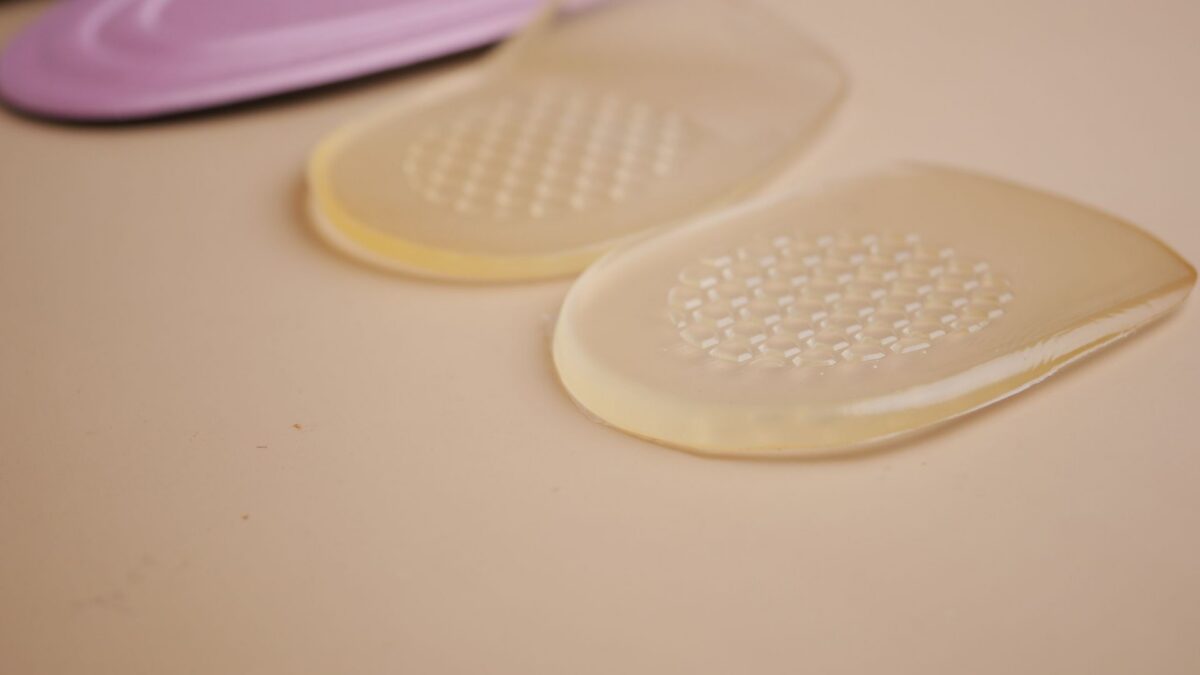
photo of gel shoe inserts
OTC inserts may provide temporary relief, but they can lead to more pain down the road

OTC Arch Insoles Don’t Help

This patient will typically buy over-the-counter arch insoles under the assumption that her arches need support. More often than not, however, this person will end up with localized pressure under her heel. She finds herself constantly seeking out carpeted areas or swapping her fall footwear for slippers just to walk around her kitchen.

When a patient visits SmartStep Foot and Ankle with this type of pain, our first step is identifying the exact cause of heel discomfort to protect the underlying bone:

In-Office Cushion & Bone Assessment

Rather than offering a generic diagnosis, Dr. Lanier performs weight-bearing evaluations and uses high-resolution diagnostic imaging directly in our office. This allows us to measure the thickness of the subcalcaneal fat pad and rule out stress fractures or nerve entrapment.

Targeted Structural Custom Orthotics

To protect the heel bone without causing arch strain, we design a customized cushioning protocol. This involves prescribing and designing specialized custom orthotics as well as modifying footwear with shock-absorbing soles. Custom orthotics may be engineered with deep heel cups that consolidate and center the remaining fat pad directly under the bone.

Restored Comfort on Hard Surfaces

By restoring the way pressure gets distributed across the fat pad, impact can be redirected away from sensitive bone. Often within a short time, patients return to enjoying local shopping, community events, and daily walks without constant heel pain.

Whether you’re managing chronic heel soreness or sudden pain after a day on your feet, our goal at SmartStep Foot and Ankle is to provide clear answers, modern in-office care, and a direct path to comfortable mobility.

Modern Foot and Ankle Care in Fort Mill

If spending time on hard floors or enjoying outdoor activities leaves your heels feeling bruised and tender, you don’t have to suffer. With a proper evaluation, our team can ensure you receive the exact offloading and support your feet need.

Book Your Visit With SmartStep Foot & Ankle in Fort Mill, SC

SmartStep Foot and Ankle is proud to serve as your local source for expert podiatry in the Fort Mill region. We’re conveniently located, and our state-of-the-art office provides comprehensive care for active adults, seniors, and families across Fort Mill, Tega Cay, Rock Hill, and Indian Land.

Our local practice offers:

  • Advanced In-Office Diagnostics: High-resolution digital X-rays and dynamic pressure testing to isolate the root cause of heel pain.
  • Hassle-Free Patient Technology: Our online platform offers easy booking right from our site.
  • Same-Day and Next-Day Appointments: Skip the wait and get seen faster.

Don’t Let Heel Pain Slow You Down

If standing or walking on hard surfaces triggers deep heel pain, let our team help you find the right solution. Book your visit with SmartStep Foot and Ankle right now – Same-day and Next-day appointments available in Fort Mill!


photo-of-a-youth-playing-soccer-on-a-field-in-Fort-Mill-SC-with-text-1200x675.jpg

September 22, 2026 Fort Mill Podiatry News

Fort Mill schools are back in session, and you know what that means: Aside from groggy mornings and soon-to-be chillier temperatures, fall sports also move from preseason conditioning into high gear.

At SmartStep Foot and Ankle, we’re big fans of Friday Night Lights and weekend tournaments, but we’re also fans of keeping your feet and ankles healthy and happy. Unfortunately, this time of year is one of our busiest as new athletic activities ramp up and muscles and tendons get a jolt of reality after a summer of lounging.

Out for the Season Before It Even Begins

Pivot movement, sprints, lateral cuts and other impactful activities can leave some student athletes facing pain and even disability. Whether you’re playing at The Complex at Fort Mill, on your school team or just a friendly game of pickup in the neighborhood, our team recommends getting checked out by your podiatrist at the first sign of pain.

In fact, many parents and coaches notice their athletes complaining of a recurring pain along the outer ankle bone during this time of year. This sensation can often be coupled with a clicking during direction changes or a persistent feeling that the ankle is weak.

In some cases, these are minor symptoms that don’t require anything more than rest and proper warm-ups before practice or gametime. After all, it’s easy to want to jump right into the season when you’ve been away for the summer.

But that can be a big part of the problem. Many student athletes push themselves too hard, especially when the season first starts up. Couple that with feeling like they need to push through the pain to not let the team down, and you have a recipe for disaster.

Anatomy of the Lateral Ankle: The Peroneal Retinaculum

Running down the outside of your lower leg and looping directly behind the outer ankle bone (the lateral malleolus) are two primary tendons. The medical terms for these are the peroneus longus and peroneus brevis.

Together, these tendons act as the primary dynamic stabilizers of your foot. In addition to stability, these tendons help to keep your ankle from rolling outward and allow you to push off forcefully when changing directions.

At the heart of this is the superior peroneal retinaculum. While that sounds like a mouthful, this band of tissue holds the tendons securely in a bony groove.

When someone twists an ankle or exerts sudden lateral force on the field, this retaining band can stretch, tear, or pull away from the bone. The resulting stress may lead to clinical problems, including:

Tendon Subluxation

Without a secure retaining band, the peroneal tendons actually slip out of their natural groove and snap over the ankle bone during cutting movements. Athletes often feel a popping or clicking sensation accompanied by sharp pain when this happens.

Subtalar Joint Strain

When the peroneal tendons become unstable, the ankle and foot may have to compensate during movement. Over time, repeated stress can contribute to inflammation and instability in the surrounding joints.

Treating peroneal instability requires more than just basic icing and an elastic bandage. While those treatments may provide temporary relief, they fail to address the core issue: there is damage to the structural retaining band, and this is what leaves athletes vulnerable to ankle instability and other long-term complications.

What a Typical Patient Journey Looks Like

For many active individuals and youth athletes in Fort Mill, dealing with an ankle injury often starts with a minor twist and turns into a lingering problem.

A common scenario we see in high school athletes across York County: a 16-year-old soccer player twists her outer ankle during an early September match. After taking four days off to rest and let the initial swelling go down, she feels ready to get back on the field.

But as soon as she tries to make a sharp lateral cut or pass the ball, something feels wrong. She experiences an uncomfortable snapping behind her outer ankle bone, and this is often accompanied by a sudden wave of weakness.

Terrified of rolling her ankle again, she starts subconsciously shifting her weight while running. Within a week, she’s also developing secondary pain in her opposite knee from compensating. This is common not only in sports but in the general population we see in Fort Mill.

Our Protocol for Relief

When a patient walks into SmartStep Foot and Ankle with a story like this, Dr. Lanier takes a personal interest in the patient. Although we see many of the same injuries time and again at SmartStep Foot and Ankle, we recognize that your case is unique.

To get a thorough evaluation of what’s happening, we begin with a clinical evaluation and dynamic imaging. Our technology allows us to view tendons in motion, and this is how we can see the peroneal tendon slipping out of its natural groove.

Afterward, we begin developing a personalized recovery plan. We base treatment on your goals and lifestyle, and we want to keep you active and engaged while you heal.

For lateral tendon instability, a plan may require stabilizing the ankle in a specialized dynamic brace. We may also use targeted ultrasound-guided anti-inflammatory therapy to calm surrounding swelling. For some patients, we craft custom athletic orthotics to prevent abnormal joint rotation.

Back on the Field Faster

Because we take a conservative-first approach, we look for ways to help you recover without surgery whenever possible. Depending on the severity of the injury and how you respond to treatment, this may allow you to return to your sport sooner. If surgery is ultimately necessary, Dr. Lanier offers minimally invasive surgical options and will work with you to develop a treatment plan that supports a safe return to activity.

Dedicated Sports Medicine in Fort Mill, SC

Whether you’re supporting a student athlete navigating a competitive season or an active adult logging autumn miles across York, Lancaster, or Mecklenburg Counties, persistent outer ankle pain or clicking should never be ignored. Remember: catching tendon instability early may help to prevent permanent ligament laxity and has the potential to keep athletes on the field.

Opening October 2026: SmartStep Foot & Ankle in Fort Mill, SC

SmartStep Foot and Ankle is proud to announce that our brand-new physical medical office in Fort Mill, SC is officially opening in October 2026!

Located right in the heart of Fort Mill, SC, our state-of-the-art practice brings elite, specialized podiatric medicine and sports injury management directly to local families across Fort Mill, Tega Cay, Rock Hill, Lancaster, South Charlotte, and Indian Land.

Our new clinic features:

  • Advanced In-Office Imaging: Diagnostic digital imaging and real-time motion/gait analysis for immediate, accurate diagnoses.
  • Seamless Online Scheduling: Powered by Tebra, our streamlined patient portal allows you to view real-time appointment availability, complete digital check-ins, and message your care team.
  • In-Network Care: We accept major health insurance plans, ensuring high-tier specialist care is accessible for your entire family.

Is Outer Ankle Pain Holding Your Athlete Back?

Don’t let unaddressed tendon instability turn into a season-ending injury. Our team is ready to help restore stability and performance. Schedule your visit with Dr. Lanier today at SmartStep Foot and Ankle!


photo-of-hiking-boots-in-nature-with-text-1200x675.jpg

September 8, 2026 Fort Mill Podiatry News

If you’re like us, you love the Autumn air. It’s not too cool yet, but this time of year allows the summer heat to dissipate to the point where getting outdoors doesn’t result in drenched shirts and dry mouths.

In the Fort Mill area, some of our favorite spots to hike during the cooler months include the Anne Springs Close Greenway and the Lake Haigler Trail. Dr. Lanier and his family routinely hit the trails in the area, and he encourages his patients to stay safely active.

One problem, however, that keeps cropping up whenever people transition from flat indoor surfaces to uneven outdoor terrain is the potential for arch collapse. This is a condition that occurs alongside a condition known as posterior tibial tendon dysfunction.

At its core, PTTD is a version of adult-acquired flatfoot. Some of the symptoms that may suggest PTTD include an aching pain along the inside of the ankle and arch that tends to get worse with long walks or hiking.

Unfortunately, some people ignore these warning signs and try to power through, but these symptoms may be a signal that you’re doing real damage to your body’s biomechanics.

The Structural Cable of Your Arch: The Posterior Tibial Tendon

You can think about the posterior tibial tendon as a structural support cable. It starts in your calf muscle, travels down the inside of your leg, loops behind the inner ankle bone, and attaches to several bones in the midfoot.

The job of this tendon is to hold up your arch and provide dynamic stability each time your foot strikes the ground. When healthy, it locks your midfoot into a rigid lever so you can push off efficiently while walking or climbing.

If you’ve hiked any of the trails or off-road paths around Fort Mill, you already know that roots, sticks, small hills, and other clutter can mean you’re constantly having to contend with shifts in pressure being placed on your arches.

The end result of all of this movement and shifting can present in a number of ways, including:

Repetitive Tendon Elongation

On uneven ground, your inner ankle tendon must continuously contract and stretch to keep your foot from rolling inward. Over long trail walks, the constant tiny strains can cause the tendon tissue to stretch. When this happens, you may experience inflammation.

Progressive Arch Flattening

As the posterior tibial tendon tires out, it can lose strength to support the arch. The midfoot joints begin to collapse under your body weight, and this can cause the foot to flatten out over time.

Sinus Tarsi Compression

When the arch collapses inward, the bones on the outside of the ankle press against each other. This can create secondary pain on the outer ankle, and many hikers end up confused as to where the pain is actually originating from.

Aside from these potential complications, it’s important to note that PTTD is a progressive condition. Left untreated, a stretched posterior tibial tendon has the potential to lead to permanent structural arch breakdown, rigid joint deformity, and chronic ankle arthritis.

What a Typical Patient Journey Looks Like

For many active adults in Fort Mill, dealing with posterior tibial tendon strain often starts as a minor inconvenience during weekend hikes, but it can eventually turn into a daily mobility issue.

One common scenario we see in active adults across Fort Mill and Tega Cay would involve a 54-year-old outdoor enthusiast who begins logging around five miles every weekend on Greenway trails once September arrives.

After a few weeks, he starts to notices a dull throbbing that sits deep along his inner ankle after his walks. Within a month, the pain starts earlier in his walks.

He begins noticing that his favorite hiking boots are wearing down abnormally fast along the inside edge of the sole, and when he stands in front of a mirror, his inner ankle looks like it’s slightly bowing inward toward the floor.

When a patient visits Dr. Lanier at SmartStep Foot and Ankle with these symptoms, we focus on identifying the exact stage of tendon strain to prevent permanent arch collapse.

A typical visit may look like:

In-Office Structural Evaluation

While our goal is to get you out of pain, we also want to address root causes. That’s why Dr. Lanier often performs weight-bearing functional assessments and dynamic diagnostic ultrasounds right in the office. These diagnostics let us visualize the posterior tibial tendon on screen to check for fluid buildup (tenosynovitis) or the aforementioned tendon elongation.

Custom Tendon Offloading

We also want to approach activity safely when you’re dealing with inflamed tendons. We may recommend temporary dynamic bracing, targeted physical modalities to reduce inflammation, and custom orthotics to support the midfoot joints on uneven ground. Dr. Lanier will provide guidance based on your unique healthcare concerns and lifestyle.

Long-Term Arch Protection

As mentioned, the posterior tibial tendon is like a structural cable in the body, and it acts as a kinetic chain. When we support this chain, we have the opportunity to relieve stress on the inner ankle tendon and stabilize the arch. Within a few weeks, patients often return to enjoying outdoor walks without inner ankle throbbing or structural breakdown.

Comprehensive Arch & Tendon Care in Fort Mill

Whether you’re managing early arch fatigue or persistent inner ankle pain, our goal at SmartStep Foot and Ankle is to provide clear answers, modern in-office diagnostics, and a clear path to keeping your foundation strong.

If your autumn walks leave you with arch fatigue, inner ankle aching, or visible foot flattening, early evaluation is critical. Unlike minor muscle soreness, tendon dysfunction typically requires structural support to stop permanent progression.

Don’t Let Arch Strain Limit Your Autumn Activities

If daily exercise or simply walking are causing inner ankle pain or arch fatigue, let our team protect your foundation. Schedule your visit with SmartStep Foot and Ankle right now!


photo-of-childrens-feet-lined-up-on-a-soccor-field-in-Fort-Mill-SC-with-text-1200x675.jpg

August 18, 2026 Fort Mill Podiatry News

August in Fort Mill means many things for families, including a shift into sports season. Fall preseason sports camps kick into high gear for football and soccer,  and youth athletic leagues begin to fill their rosters. With school starting back, local high school athletes are also taking to the fields for intensive two-a-day practices for both experienced players and newcomers alike.

Across local facilities like Walter Y. Elisha Park, the Complex at Fort Mill, and high school stadiums throughout York County, outdoor athletic fields see their heaviest traffic of the year. While the excitement sits heavy in the air, late summer can also introduce a harsh environmental reality for young athletes and active adults alike: severe ground compaction.

After weeks of August heat and minimal rain, natural grass fields and turf surfaces bake until they are almost as hard as concrete. Transitioning into high-impact running, jumping, and cutting on these unforgiving surfaces can cause a sharp spike in acute heel injuries. This is something our Fort Mill podiatry practice sees often, and this rise in reports of heel pain can have many causes; But, most notably, severe calcaneal strain (heel bone impact) and plantar fascial irritation are often to blame.

Understanding how hardened playing fields affect foot mechanics is essential to stopping heel pain before it sidelines an athlete for the fall season. The good news? SmartStep Foot and Ankle is here to help with expert care for heel pain in the Fort Mill region.

The Physics of Hard August Turf Surfaces

When an athlete runs on a compliant surface, the ground absorbs a portion of the impact energy. This reduces strain on feet to a degree, but in August, sun-baked soil and compressed turf lose almost a lot of surface elasticity.

This creates a high-impact environment that places intense mechanical stress on the foot:

  • Attenuated Shock Absorption: Because the ground refuses to yield, kinetic force rebounds directly back into the foot. The calcaneus (heel bone) takes the brunt of this force, transferring severe shear stress across the plantar fascia.


  • Rigid Cleat Mechanics: Transitioning straight into rigid athletic cleats compounds the issue. Most cleats feature minimal arch support and thin soles, forcing the tissues under the foot to stretch beyond their normal range under heavy impact.


  • Growth Plate Vulnerability in Youth Athletes: For kids and teenagers, hard surfaces pose an even greater risk. The calcaneal growth plate (the growing area at the back of the heel) is softer than mature bone. Repetitive pounding on hardened fields causes painful inflammation to this area, potentially leading to a condition known as Sever’s Disease. This condition is sometimes mistaken by parents as “growing pains,” but it’s actually something that requires evaluation and treatment from a local podiatrist.


Without proper intervention, minor morning heel stiffness can rapidly deteriorate into chronic tendonitis, severe apophysitis, or stress fractures.

CLINICAL CASE STUDY: Jordan’s Stabbing Heel Pain

To protect patient privacy, this study represents a composite of typical patient experiences in our local service area.

The Patient: Jordan, a 15-year-old soccer player in Fort Mill, spent his August preparing for the upcoming club season. Between morning fitness sessions and evening scrimmages, he was logging over 15 hours a week on hard practice fields.

The Challenge: By the second week of preseason, Jordan developed a sharp, stabbing pain in his left heel when accelerating. Assuming he just needed to push through it, he kept playing. By week three, he was limping off the field and could not put his heel down first thing in the morning. His parents worried he would miss the opening games of the season.

The Diagnostic Approach: Rather than offering generic insoles or recommending a month of complete rest, SmartStep Foot and Ankle performed a comprehensive podiatric evaluation to isolate the precise cause of his pain.

Through clinical examination and gait analysis, our podiatry team identified that Jordan was suffering from acute traction apophysitis compounded by severe plantar fascial strain. These conditions were a direct result of high-impact training on hardened ground in cleats lacking heel elevation.

Our team implemented a targeted structural solution: customizing specialized offloading heel orthotics designed to fit inside his cleats, prescribing a targeted stretching protocol for the Achilles tendon, and adjusting his workload mechanics.

The Result: Jordan’s acute pain subsided within days. By addressing the root biomechanical strain caused by late-summer ground conditions, he returned to full-contact practice safely and fully supported.

Dedicated Foot and Ankle Care for Fort Mill Families

Whether you are supporting a youth athlete in fall camps or an active adult tackling late-summer activities across Fort Mill, Tega Cay, or Rock Hill, heel pain should never be brushed off as “just soreness.” Pushing through or minimizing acute strain on hard surfaces frequently leads to chronic tissue breakdown and extended recovery times.

SmartStep Foot and Ankle is dedicated to bringing modern, root-cause podiatric care to active individuals and families throughout our local community.

Don’t Let Hard August Fields Sideline Your Fall Season

If late-summer sports or workouts have triggered heel pain, arch soreness, or ankle stiffness, get an accurate diagnosis before the season kicks into high gear.

Our team in Fort Mill is here to help you find the root cause. Schedule an appointment with SmartStep Foot and Ankle right now for fast care!


photo-of-two-beach-chairs-left-on-a-beach-by-people-on-vacation-with-text-1200x675.jpg

By late August, summer travel season is drawing to a close and families across Fort Mill, Tega Cay, and Rock Hill are returning from final beach trips, mountain getaways, and long weekends spent navigating airports, theme parks, or walking miles through historic towns. In fact, Dr. Lanier and his family recently returned from a family trip to Alaska!

While most people expect a few days of general fatigue after a busy vacation, many return home with a much more disruptive problem: a deep, burning pain along the inside of the ankle, accompanied by a tingling or “pins and needles” sensation radiating into the arch and sole of the foot.

Because heel and arch pain are so common, people almost always assume they’ve developed a standard case of plantar fasciitis or a minor ankle strain during their trip. They spend weeks rolling their foot on cold water bottles or wearing generic arch sleeves, only to find the pain getting worse.

In reality, prolonged walking, sudden swelling, and unsupportive travel footwear often trigger a very different, highly specific condition: Tarsal Tunnel Syndrome.

Aside from the problem of pain, the further challenge is discerning between tissue inflammation and nerve compression. This is where having a comprehensive evaluation performed by a Fort Mill podiatrist is crucial to resolving post-vacation foot pain before it becomes chronic.

What Is Tarsal Tunnel Syndrome?

To understand Tarsal Tunnel Syndrome, it helps to look at the anatomy of the inner ankle.

The tarsal tunnel is a narrow space located on the inside of your ankle, right behind that bony bump (the medial malleolus). This tunnel is covered by a thick, protective band of tissue called the flexor retinaculum.

Passing through this tight space are vital tendons, blood vessels, and most importantly, the posterior tibial nerve. This is the main nerve responsible for providing sensation to the bottom of your foot.

Tarsal Tunnel Syndrome is essentially the foot equivalent of Carpal Tunnel Syndrome in the wrist. When the tissues inside or surrounding this narrow space become inflamed or swollen, pressure builds up, directly compressing the posterior tibial nerve.

Why Late-Summer Travel Triggers Nerve Entrapment

Vacations create a perfect storm of mechanical stress for the tarsal tunnel, driven by three main factors:

  • Repetitive Over-Pronation: Walking thousands of extra steps in flat sandals, flip-flops, or worn-out travel sneakers while on vacation causes the arch to collapse repeatedly. This inward rolling of the foot (over-pronation) stretches the flexor retinaculum, tightening the roof of the tunnel and pinching the nerve beneath it.
  • Travel-Induced Fluid Retention: Long flights, extended car rides, and summer heat lead to lower-extremity fluid pooling. As fluid accumulates around the inner ankle, it increases pressure within the already tight tarsal tunnel.
  • Micro-Trauma from Uneven Terrain: Navigating uneven streets, hiking trails, or sandy beaches requires constant micro-adjustments from the tendons in the ankle, leading to localized inflammation that crowds the nerve channel.

Unlike plantar fasciitis, which typically produces a sharp, stabbing pain localized to the bottom of the heel during those first few steps in the morning, Tarsal Tunnel Syndrome produces neurological symptoms: burning, numbness, electrical shocks, or a sensation that the bottom of your foot is asleep or padded with cardboard. These symptoms frequently intensify at night or after extended periods of standing.

CLINICAL CASE STUDY: Elena’s Evaluation

To protect patient privacy, this study represents a composite of typical patient experiences in our local service area.

The Patient: Elena, a 48-year-old resident of Fort Mill, returned from an active late-summer vacation that involved daily walking tours and sightseeing.

The Challenge: Shortly after returning home, Elena developed a throbbing, burning ache in her right arch and big toe. Assuming it was plantar fasciitis, she bought off-the-shelf heel cups and tried to stretch her calves. However, after two weeks of resting at home and taking short walks along the Anne Springs Close Greenway in Lancaster, the burning sensation worsened, particularly when she tried to sleep. The pain began interfering with her work day and her ability to stay active.

The Diagnostic Approach: During a comprehensive clinical evaluation at SmartStep Foot and Ankle, a targeted diagnostic workup was performed. A physical test known as Tinel’s Sign was performed to gather initial diagnostic data. This test involves light tapping over the posterior tibial nerve to reproduce the tingling sensation down into the foot. Coupled with a dynamic gait analysis, the evaluation revealed that Elena’s severe over-pronation, combined with the sudden increase in travel mileage, had compressed her posterior tibial nerve inside the tarsal tunnel.

Rather than continuing ineffective plantar fascia stretching, a nerve-offloading treatment protocol was initiated. This included custom biomechanical orthotics engineered to control her arch collapse, targeted anti-inflammatory physical modalities to reduce swelling inside the tunnel, and footwear modifications.

The Result: Within three weeks of relieving the physical pressure on the posterior tibial nerve, Elena’s burning pain and nighttime numbness completely resolved, allowing her to resume her normal walking routine pain-free.

Accurate Foot and Ankle Diagnostics for Fort Mill, Tega Cay, and Rock Hill

Misdiagnosing nerve pain as simple muscle soreness is one of the primary reasons foot pain persists for months. When nerve compression is left untreated, chronic pressure can lead to long-term nerve irritation and persistent numbness. Getting an accurate, root-cause diagnosis is essential to restoring your mobility.

SmartStep Foot and Ankle is dedicated to delivering modern, precise podiatric care to families and active individuals throughout our local community.

Don’t Let Post-Vacation Foot Pain Become a Chronic Issue

If late-summer travel has left you with persistent burning, numbness, or arch pain, let our team pinpoint the exact cause and get you back on your feet.

Schedule Your Appointment With SmartStep Foot and Ankle Today in Fort Mill!


a-graphic-showing-a-foot-and-a-magnifying-glass-with-text-1200x675.jpg

By July, summer is in full swing across Fort Mill, SC, and the Carolinas. Whether it’s training for upcoming fall marathons, logging miles on local greenways, or spending long weekends navigating theme parks and outdoor festivals, our collective physical activity reaches its peak during the warmer period.

But July also marks a predictable uptick in our clinical calendar. Around this time of year, many active adults begin experiencing a specific type of discomfort: a persistent, deep ache along the outside of the ankle, a sharp burning sensation under the ball of the foot, or a feeling that their ankle is “giving way” on uneven surfaces.

When these symptoms appear mid-summer, patients often blame a single misstep or assume they just need to rest for a few days. In reality, these injuries are rarely caused by a single traumatic event.

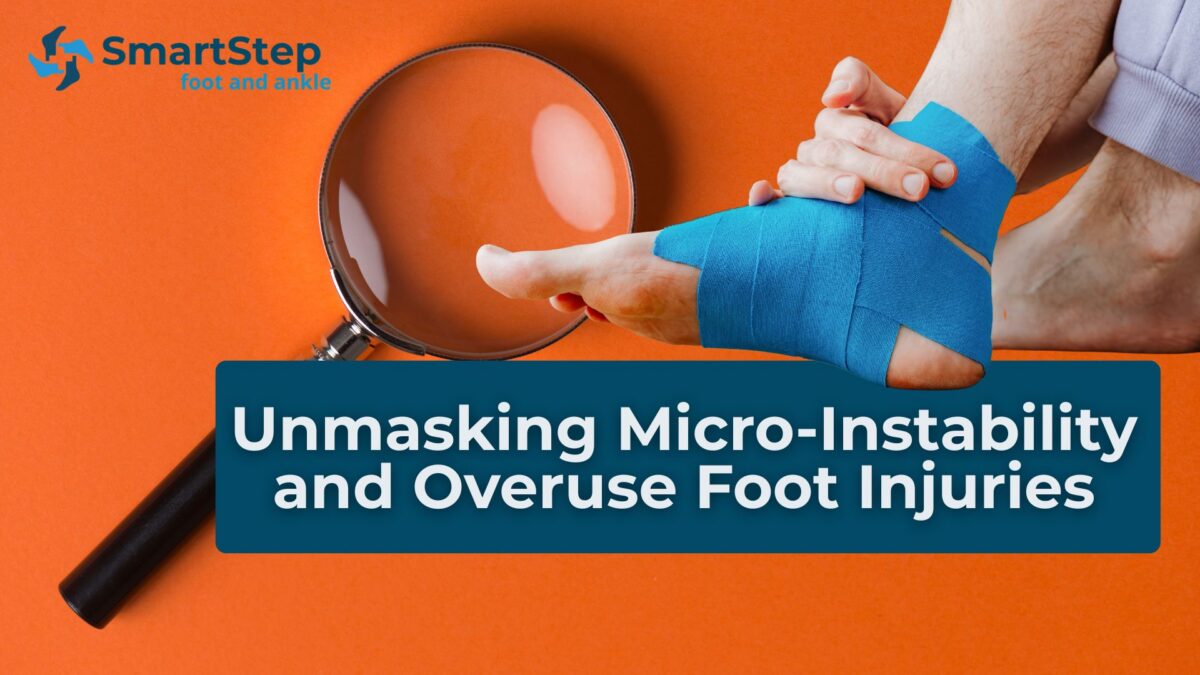
Instead, they are the result of micro-instability, a fancy term for subtle structural weaknesses. Micro-instability is often unmasked when summer activities demand rapid acceleration, mileage increases, or prolonged weight-bearing gives way to excessive pressure on your feet and ankles.

Understanding the mechanics of micro-instability is crucial to stopping a minor seasonal ache from turning into a chronic, limiting injury.

The Cumulative Strain of Peak Summer Activity

The good news? Your feet are designed to adapt to a wide variety of surfaces and forces. The challenge, however, during the high-demand month of July, is that two specific mechanical factors push our feet and ankles past their physiological limits:

Repetitive Micro-Trauma

When you increase your walking or running mileage on hard Carolina clay, concrete walkways, or uneven terrain, your tendons and ligaments experience repetitive micro-tears. If your foot suffers from minor structural instability (such as a hidden high arch or mild ligament laxity), certain muscles are forced to overwork to keep you balanced. Over time, this leads to acute conditions like peroneal tendonitis or stress fractures.

Metatarsal Overload

The transition to faster pacing, explosive movements in summer sports or simply walking long distances in summer shoes shifts your body weight forward onto the metatarsal heads (the ball of the foot). Without proper stabilization, this localized pressure causes severe inflammation of the delicate nerves and tissues, often resulting in capsulitis or Morton’s neuroma.

When micro-instability is left unaddressed, your body naturally alters your gait to avoid the pain. This compensation quickly translates into secondary issues, causing unexplained pain in your shins, knees, and hips.

Case Study: Ignored Pain Leads to Trouble

To protect patient privacy, this study represents a composite of typical patient experiences across our southern service area.

The Patient

David, a 45-year-old resident of York County, was an avid fitness enthusiast who spent his July mornings running and his weekends keeping up with his kids’ outdoor activities.

The Challenge

Midway through July, David noticed a nagging pain on the outside of his right ankle and a sharp, pebble-like sensation under the ball of his foot during his runs. He ignored it, attributing it to his intense training schedule.

Unfortunately, during a weekend outing with his family on an uneven gravel trail, his ankle subtly rolled. While it wasn’t a severe sprain, the underlying micro-instability was fully exposed. By the next morning, he couldn’t push off his foot without significant pain, sidelining him from his workouts and making his daily commute miserable.

The SmartStep Intervention

David needed an expert opinion from a specialist who understood active lifestyles and wouldn’t just tell him to “take six weeks off.” He reached out to SmartStep Foot and Ankle and scheduled an evaluation at our Fort Mill clinic.

During his in-person biomechanical exam, direct palpation immediately revealed significant focal tenderness along the peroneal tendon, while hands-on range-of-motion testing isolated the underlying subtalar micro-instability that virtual reviews simply can’t detect. By analyzing his physical shoe wear patterns and conducting a dynamic gait analysis right in the office, our podiatrist identified both the primary tendon inflammation and localized capsulitis around the metatarsal joints.

We implemented a targeted, accelerated recovery plan that included custom in-office offloading protocols, specialized therapeutic taping, and precise biomechanical adjustments to his footwear to correct the structural micro-instability at its source.

The Result

By addressing the root mechanical cause through dedicated clinical care rather than just masking the symptoms, David was able to resume low-impact cross-training within a week. He returned to his normal running routine on local trails by the end of the month. He also felt stronger, pain-free, and with a clear strategy to prevent recurrent instability.

Advanced Podiatric Solutions on Your Schedule

At SmartStep Foot and Ankle, we believe that specialized podiatric medicine should match the speed and demands of your active life. Located right here in Fort Mill, SC, our practice provides high-level diagnostic and clinical foot and ankle care to patients across York County, South Charlotte, and the surrounding communities.

We tailor our specialized services to protect your mobility at every stage:

In-Clinic Biomechanical & Gait Evaluations

Comprehensive physical assessments to pinpoint micro-instability, structural imbalances, and subtle gait compensations before they cause chronic damage.

Specialized Sports Medicine & Overuse Injury Care

Targeted, evidence-based therapies for active adults and student-athletes dealing with heel pain, tendonitis, stress fractures, and joint overload.

Custom Orthotics & Advanced Offloading

Precision-designed corrective devices built specifically for your foot architecture and daily activity demands.

Don’t Let Structural Instability Sideline Your Active Lifestyle

If the acceleration of your summer activities has triggered nagging foot or ankle pain, don’t wait for a minor micro-tear to turn into a debilitating injury. Let our team identify and correct the underlying mechanical cause right here in our office.

Schedule your visit at our podiatry clinic in Fort Mill today! Take a smarter step toward healthier feet!


photo-of-kinetic-balls-with-text-1200x675.jpg

By the time summer fully kicks in around the Fort Mill area, our daily step counts look vastly different than they did in the winter. Between vacation travel, neighborhood evening walks, and outdoor weekend projects, our lower extremities are subjected to a massive increase in repetitive mechanical load.

While this is good news for your body since exercise is vital for overall health, the tradeoff for some people is pain. Although you might be well aware of what’s caused a pain in your foot or ankle, a sudden onset of mid-summer foot or ankle pain is usually treated as a localized mystery. You wake up with a throbbing arch, a tender Achilles tendon, or a sharp pain in the ball of your left foot, and you rack your brain trying to remember when you injured it.

But as podiatrists, when we see a patient suffering from a sudden, unexplained one-sided (unilateral) foot injury in July, we rarely look just at the foot that hurts. Instead, as strange as it sounds, we look at the opposite leg.

What you are likely experiencing is a common but misunderstood biomechanical phenomenon known as asymmetrical kinematic compensation. This can be thought of as a type of kinetic payback, and it’s the process by which an old, healed, or forgotten injury on one side of your body forces the opposite foot to bear the structural weight of your active summer lifestyle.

The Body’s Hidden Balancing Act

The human body is an interconnected kinetic chain, meaning force applied to one area may be channeled to other areas. When you walk, run, or stand, your musculoskeletal system constantly adjusts to distribute your body weight evenly between both sides.

However, if you have ever suffered a significant injury in the past such as a sprained right ankle in college or chronic hip tightness on one side, your nervous system alters your movement patterns to protect that vulnerable area. This is called a compensatory gait.

While you may no longer feel pain from that old injury, the altered movement pattern often remains baked into your neurology. Your brain is subconsciously rewired to compensate from the old injury!

When your physical activity accelerates during the summer, this asymmetry is pushed to its breaking point, often through the following:

The Overloaded Foundation

To protect a slightly weaker or stiffer joint on one side, your body subconsciously shifts a higher percentage of your body weight and impact force to the opposite, healthy side.

The Structural Collapse

Over a mile or two of walking, a 5% shift in weight distribution is negligible. Over a high-activity summer month involving tens of thousands of steps on hard concrete or uneven park trails, that extra load acts like a sledgehammer on the healthy foot. The tissues eventually fatigue, leading to acute, localized conditions like unilateral plantar fasciitis, posterior tibial tendonitis, or stress fractures.

In short, the foot that hurts is simply the one that has been working overtime to cover for a hidden weakness elsewhere in the kinetic chain.

A Case Study Out of Fort Mill, SC

To protect patient privacy, this study represents a composite of typical patient experiences across our Fort Mill, SC service area.

The Patient

Mark, a 51-year-old active professional, spent his summer traveling, golfing, and managing extensive landscaping projects around his property.

The Challenge

In mid-July, Mark developed an agonizing, burning pain in the arch of his left foot that made walking almost impossible. He was baffled because he couldn’t recall any trauma to his left leg.

During his assessment at our office, our clinical team looked into his medical history and discovered that Mark had undergone minor arthroscopic surgery on his right knee two years prior. Though his right knee felt completely fine now, a specialized dynamic screening revealed that Mark was unconsciously shortening his stride on his right side and shifting his weight early onto his left foot to avoid fully loading that right knee joint. His left foot was structurally collapsing under the constant, asymmetrical overload.

The SmartStep Intervention

Mark needed a specialist who could look beyond localized symptoms and identify why his foot was suddenly failing under a normal activity load. He scheduled an in-person evaluation at our Fort Mill clinic.

During his comprehensive clinical assessment, our podiatrist performed a full hands-on biomechanical check and weight-bearing gait evaluation directly on our clinic track. While evaluating his left arch, direct palpation confirmed acute plantar fascia strain, but the true breakthrough came when analyzing his overall motion pattern. Our team identified that Mark was unconsciously shortening his stride on the right side and shifting his body weight prematurely onto his left foot to avoid fully loading his previously injured right knee joint.

Rather than just masking the left foot pain with temporary anti-inflammatories, our team addressed the root systemic cause. We provided targeted, in-office therapies to calm the acute left plantar fascia strain, designed specific mobility exercises to restore full extension to his right knee, and scanned him for custom orthotics designed to mechanically enforce a true 50/50 weight distribution across his entire kinetic chain.

The Result

Mark’s left foot pain subsided within two weeks of rebalancing his gait. By correcting the hidden kinetic asymmetry in our office, we not only resolved his immediate foot pain but also protected his hips and lower back from future compensatory strain, allowing him to finish his summer golfing and travel without setback.

Smart, Systemic Podiatric Care Built Around Your Life in Fort Mill

Root-Cause Podiatric Care in Fort Mill, SC

Uncovering complex biomechanical compensations requires specialized, highly diagnostic care. Located right here in Fort Mill, SmartStep Foot and Ankle delivers solution-driven, comprehensive podiatric medicine designed to get to the true origin of your pain.

We provide dedicated clinical services tailored to active individuals across York County, South Charlotte, Tega Cay, and Rock Hill:

  • In-Office Gait & Biomechanical Screening: Hands-on evaluations to analyze movement patterns, identify hidden kinematic compensations, and prevent structural collapse.

  • Custom Functional Orthotics: Precision-engineered orthotic devices built to rebalance weight distribution, offload overworked tissues, and correct structural asymmetries.

  • Targeted Sports Medicine & Rehabilitation: Specialized care for acute strains, tendonitis, and overuse injuries, combining in-clinic therapy with actionable at-home rehab protocols.

Stop Treating the Symptoms. Fix the Root Cause.

If outdoor activity or a new gym routine has triggered unexplained, one-sided foot or ankle pain, don’t wait for the imbalance to cause secondary damage to your knees, hips, or back. Let our team uncover the structural root cause right here in our office.

Schedule your visit with SmartStep Foot and Ankle in Fort Mill today!


photo-showing-three-pairs-of-feet-in-shoes-with-text-1200x675.jpg

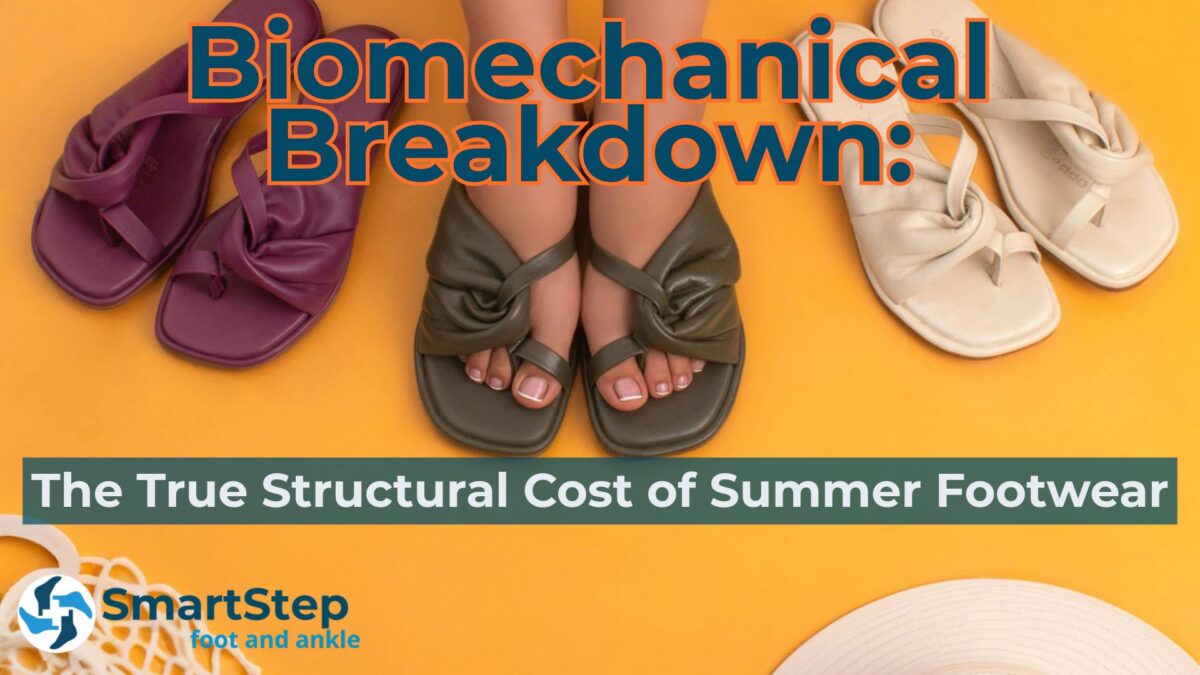
By the time June arrives in the Carolinas, our closets undergo a major shift. Heavy work shoes and supportive athletic sneakers are pushed to the back, replaced by the effortless convenience of flip-flops, slides, boat shoes, and lightweight sandals.

It feels like a natural part of embracing the summer lifestyle in the Charlotte Metro and surrounding York County communities. However, within a few weeks of making this footwear transition, many adults notice a frustrating trend. It might start as a sharp ache in the heel when stepping out of bed, a dull throbbing in the shins during an evening walk, or even a sudden onset of lower back and knee stiffness.

When these pains happen, patients rarely blame their summer shoes. Instead, they assume they overdid it at the gym, or they look into buying expensive knee braces. In reality, what they are experiencing is often a structural cascade failure caused by a sudden lack of biomechanical support.

At SmartStep Foot and Ankle, we know that understanding the true physical cost of unsupportive summer footwear is essential to protecting your mobility through the high-activity summer months.

The Domino Effect of the Unsupported Foot

Your foot is a complex architectural marvel containing 26 bones, 33 joints, and more than 100 muscles, tendons, and ligaments. This intricate structure has one primary job: to act as a shock absorber for your entire body and provide a stable lever for propulsion.

When you walk in a high-quality supportive shoe, the arch of your foot is braced, and your heel is stabilized. When you transition exclusively to flimsy summer footwear, especially completely flat flip-flops or unyielding sandals, that support vanishes entirely.

This triggers a predictable biomechanical domino effect throughout your lower body that goes on to affect joints and even entire muscle groups:

Over-Pronation (The Flattening Effect):

Without proper arch support, the foot is forced to roll inward excessively with every step. This over-pronation flattens the arch, stretching the plantar fascia ligament and placing immense, repetitive strain on the tendons of the inner ankle.

Tibial Torsion (Twisting the Knee):

When your foot rolls inward, it forces the tibia (shin bone) to rotate inward as well. This unnatural twisting motion travels straight up the leg, altering the tracking of the kneecap and putting stress on the knee joint.

Pelvic Tilt and Lower Back Strain:

Because your foundation is unstable, your hips must compensate to keep your body balanced. This subtle shift in your gait changes the alignment of your pelvis, frequently resulting in unexplained, chronic lower back pain after a long day on your feet.

In short, a shoe with zero structural support forces your muscles and joints to do the mechanical work that the shoe should be doing. Over thousands of steps a day, that leads to overuse injuries and the pains we described above.

CASE STUDY: Sara’s Summertime Sandals

To protect patient privacy, this study represents a composite of typical patient experiences across our service areas like Fort Mill, SC.

The Patient:

Sarah, a 42-year-old remote corporate trainer, considered herself highly active. She balanced weeknight gym sessions with busy weekends running errands, attending outdoor markets in Charlotte, and traveling with her family.

The Challenge:

Every June, Sarah lived in her favorite pair of flat leather sandals. By mid-month, she developed a persistent ache in her left knee and a deep soreness in the arch of her foot. Believing she had strained her knee at the gym, she stopped her workouts and spent weeks foam-rolling her legs, but the pain worsened. The daily friction of walking without support eventually led to severe heel pain that made managing her busy, on-the-go lifestyle miserable.

The SmartStep Intervention:

Sarah’s pain reached a point where she couldn’t walk through a grocery store without limping. Seeking a specialist who could look beyond quick-fix knee braces, she scheduled an in-person evaluation at SmartStep Foot and Ankle’s Fort Mill clinic.

During her clinical visit, Dr. Lanier performed a comprehensive hands-on biomechanical check and dynamic gait analysis right in the office. By observing her standing alignment and watching her stride pattern on our clinic track, Dr. Lanier identified that her flat sandals were allowing severe, uncompensated over-pronation. This foot-level collapse was causing her tibia to twist inward, creating the exact knee-tracking issues and plantar fascia strain causing her pain.

We provided immediate footwear education, implemented localized physical therapy protocols to calm the acute tissue inflammation, and captured precision 3D physical metrics right in the office to craft custom, low-profile orthotics designed to fit seamlessly into her preferred casual footwear.

The Result:

Within two weeks of receiving her custom stabilization, Sarah’s knee pain completely disappeared, and her heel soreness fully resolved. By correcting her underlying foundation at our Fort Mill practice, she returned to her active lifestyle without sacrificing her summer plans or suffering through daily limping.

Restoring Balance Across the South Carolina Border

You shouldn’t have to compromise your active lifestyle just because your seasonal footwear changes. Located right here in Fort Mill, SmartStep Foot and Ankle provides comprehensive, solution-driven podiatric care designed to correct structural imbalances at their source.

Our local practice serves patient communities across York County, South Charlotte, Tega Cay, Rock Hill, Lake Wylie, and Lancaster:

  • In-Office Gait Analysis & Alignment Checks: Comprehensive physical screenings to evaluate posture, arch mechanics, and joint tracking across the entire lower kinetic chain.

  • Custom Low-Profile & Casual Orthotics: Precision-engineered orthotics crafted to stabilize over-pronation while fitting comfortably inside everyday shoes and casual summer footwear.

  • Targeted Inflammatory Care & Rehabilitation: Advanced clinical protocols to quickly resolve active heel pain, shin splints, and joint overload caused by unsupportive shoes.

Don’t Let Poor Footwear Alignment Undermine Your Mobility

If a change in your footwear has triggered unexplained foot, knee, or lower back pain, don’t wait for a structural strain to turn into a chronic joint issue. Let our team identify and correct the mechanical root cause right here in our office.

Schedule your in-person evaluation at our Fort Mill podiatry clinic today, and step into long-term, supported comfort!


a-woman-sitting-on-the-ground-holding-her-foot-in-Fort-Mill-SC-with-text-1200x675.jpg

June in the Carolinas means that the shift in climate is impossible to ignore. The humidity rises, outdoor community events fill our weekends, and families across the southeast region head outside to enjoy the lakefronts and parks.

But for many adults, June also ushers in a frustrating, silent medical shift: sudden, heavy fatigue in the lower legs, a throbbing ache in the feet at the end of the day, or a distinct burning sensation in the toes that disrupts sleep.

Too often, people dismiss these symptoms as a normal reaction to summer heat or “just getting older.” In reality, this seasonal shift triggers a clinical phenomenon known as the summer inversion. This occurs when rising external temperatures unmask underlying vascular fatigue, fluid retention, and early-stage neuropathy.

The good news? Understanding how the June heat impacts the intricate circulatory and nerve pathways of your feet is the first step to reclaiming your summer mobility.

The Science Behind the Swell: Vasodilation and Gravity

Your feet and ankles are the architectural foundation of your circulatory system. To pump blood back up to your heart, your lower extremities must fight a constant battle against gravity. When summer temperatures climb, your body attempts to cool itself through a process called vasodilation. This is a fancy way of describing how your blood vessels expand to bring more blood to the surface of your skin to radiate heat away.

While this process is crucial for temperature regulation, it introduces two major structural challenges for your feet:

Fluid Pooling (Dependent Edema): As veins widen, the tiny valves responsible for pushing blood upward work less efficiently. Blood and fluid begin to pool in the lowest points of your body: your ankles and feet.

Nerve Compression: As fluid builds up in the confined spaces of the foot, it creates localized pressure. This pressure can compress the small peripheral nerves, translating into a dull ache, a feeling of tightness in your skin, or a pins-and-needles sensation.

For an active adult or a senior, this is often uncomfortable and alters how you walk. Swollen, fatigued feet change your natural gait, which quickly leads to secondary overuse injuries like tendonitis, friction blisters, and joint strain.

CASE STUDY: Robert’s Summertime Blues

To protect patient privacy, this study represents a composite of typical patient experiences across the southern Charlotte Metro region.

The Patient:

Robert, a 66-year-old retired project manager, loved spending his summer evenings outdoors, walking his dog and attending local neighborhood gatherings.

The Challenge:

Every year when June arrived, Robert noticed his legs felt like lead by 6:00 PM. His favorite shoes felt uncomfortably tight, and he began experiencing a disruptive burning sensation in his arches at night.

Assuming he was just dehydrated or needed better sneakers, he pushed through the discomfort. However, the chronic swelling eventually caused his skin to become dry, stretched, and highly susceptible to friction. After a weekend outdoor event, a minor rub from his shoe turned into a deep, slow-healing blister that put his entire summer schedule at risk.

The SmartStep Intervention:

Robert’s family reached out to SmartStep Foot and Ankle for help before his skin breakdown progressed further. He scheduled an in-person diagnostic evaluation at our Fort Mill practice.

During his clinical exam, our podiatrist performed a comprehensive lower-extremity vascular assessment and neurological screening directly in the office. Through hands-on diagnostic checks, our team pinpointed the exact locations where seasonal fluid retention (dependent edema) was compressing his peripheral nerves and causing his nocturnal burning pain. We also provided immediate clinical wound care and protective dressings for his active blister.

Rather than relying on basic rest, we implemented a targeted vascular management plan. This included fitting him with medical-grade compression therapy, initiating local tissue repair protocols, and prescribing targeted structural footwear modifications to prevent recurrent friction.

The Result:

Robert’s lower-leg swelling decreased significantly within 48 hours, and his nocturnal nerve pain subsided as the tissue pressure cleared. By receiving immediate, specialized clinical care at our Fort Mill office, Robert healed his summer blister before it could progress into a dangerous, deep ulcerated infection. This allowed him to safely return to his outdoor evening walks with his dog.

Comprehensive Vascular & Neurological Podiatry in Fort Mill, SC

Managing lower-extremity swelling, fluid retention, and peripheral nerve pressure requires precise, specialized clinical care. Located right here in Fort Mill, SmartStep Foot and Ankle provides advanced diagnostic and treatment protocols designed to protect your circulatory health and keep you moving comfortably through the summer heat.

Our Fort Mill practice serves patients across York County, South Charlotte, Rock Hill, Tega Cay, and Lancaster County:

  • In-Office Vascular & Neurological Screening: Comprehensive Doppler and physical examinations to evaluate lower-extremity blood flow, identify fluid pooling, and isolate nerve compression points.

  • Specialized Wound Care & Skin Protection: Immediate, sterile clinical care for friction blisters, slow-healing wounds, and skin breakdown caused by tight footwear or severe swelling.

  • Custom Compression Protocols & Diabetic Foot Care: Tailored management plans to optimize venous return, reduce dependent edema, and protect vulnerable nerves from chronic pressure.

Don’t Let Summer Vascular Fatigue Sideline Your Mobility If warmer weather has triggered heavy legs, swollen ankles, or burning foot pain, don’t wait for a minor friction rub to turn into a serious medical complication. Let our expert team identify the root cause and protect your lower extremities right here in our office.

Schedule your in-person evaluation at our Fort Mill podiatry clinic today, and keep your foundation healthy all summer long!


photo-of-a-surgery-suite-during-a-foot-surgery-procedure-with-a-clock-graphic-and-text-1200x675.jpg

You’ve just had successful foot or ankle surgery at a top regional hospital—perhaps Atrium Health or Novant in South Charlotte or Uptown, or a specialized surgical center. The surgical team did excellent work, and you’re sent home with strict non-weight-bearing orders, a boot or cast, and instructions for post-operative follow-up visits.

Then reality hits.

Navigating post-surgical follow-up care in massive hospital complexes becomes its own ordeal. For many in Fort Mill, York County, and South Charlotte, especially seniors, diabetics, or anyone managing strict non-weight-bearing protocols, the task of navigating multi-story parking decks, endless hospital corridors, and long waiting room stays introduces severe logistical and physical friction.

At SmartStep Foot and Ankle, we recognize this post-op vulnerability. Dr. Thurmond Lanier, founder and medical director of SmartStep Foot and Ankle, knows that when podiatry patients face physical exhaustion and logistical hurdles during post-surgical recovery, healing slows down and the risk of surgical complications or re-injury goes up.

Streamlined Post-Surgical Care Close to Home

Dr. Lanier established our Fort Mill, SC practice to provide a focused, low-stress alternative to chaotic hospital plazas. Access to expert, specialized post-operative podiatric care shouldn’t cost you additional pain, strain, or long travel times across state lines. Location and clinical convenience should support your healing journey, not compromise it.

The Hidden Clinical Costs of the Waiting Room Model

The truth is that, when you’re non-weight-bearing after procedures like bunion correction, flatfoot reconstruction, ankle stabilization, or diabetic ulcer-related surgery, every trip outside the house introduces real medical risks:

Increased swelling and wound tension: Keeping the foot dependent (hanging down) during car rides, transfers, and long waits in parking decks or clinic lobbies can promote edema. This can strain fresh incisions, delay healing, and raise the chance of dehiscence (wound reopening).

Physical strain and fall risk: Hopping on one foot, maneuvering a knee scooter to and from a vehicle, navigating stairs at home or in medical buildings, and dealing with I-77 or I-485 traffic exhausts patients and caregivers. One awkward transfer can traumatize the surgical site or cause a secondary injury, possibly necessitating further care.

Delayed detection of complications: By the time you reach the exam room, fatigue sets in. Subtle signs of infection, poor perfusion, or improper durable medical equipment fit can make problems harder to assess accurately. For diabetic patients especially, whose healing is already compromised, these delays can escalate quickly.

Traditional office-based podiatry wasn’t designed for patients who can barely leave their bed or couch. In a city as spread out as Charlotte, with patients coming from Waxhaw, Matthews, Pineville, Concord, University City, and beyond, the waiting room becomes a clinical variable that actively works against optimal recovery.

Real-World Impact: How Mobile Podiatry Care Helped “Gloria”

To illustrate these points without compromising privacy, consider “Gloria,” a composite drawn from the experiences of many SmartStep patients in and around the Queen City.

Gloria is a 74-year-old retiree living alone in a classic two-story Dilworth home. She underwent reconstructive surgery to address a chronic diabetic foot ulcer that had resisted prior treatment. Post-op instructions were clear: strict non-weight-bearing for at least six weeks, elevation, and regular wound checks.

Her daughter, who works full-time in University City, used vacation time at her job to help with transport. Each follow-up became an all-day ordeal that involved loading the knee scooter into the car, fighting morning traffic, parking in a crowded deck, and waiting in a busy lobby.

Patients Are Exhausted and Ready to Give Up

Gloria would arrive exhausted, with her surgical foot throbbing from dependent positioning and her blood pressure elevated from the stress. Once in the exam room, she struggled to recall questions or absorb instructions.

A small rug trip hazard at home went unnoticed until it nearly caused a fall during one of her limited attempts to move around. Throughout this recovery, there were many times where Gloria felt like she was ready to give up and just ignore follow-up care entirely.

How SmartStep Streamlined Gloria’s Care

The turning point came when her family transitioned her follow-up care to SmartStep Foot and Ankle in Fort Mill, SC. Instead of navigating overwhelming regional medical plazas, Gloria’s post-operative management was transferred to our accessible, ground-level Fort Mill clinic.

Our board-certified podiatrist performed precise sharp debridement and advanced dressing changes in a calm, efficient clinical setting with zero parking deck navigation or long lobby delays. Our team conducted thorough, hands-on evaluations of her surgical site and provided precise home-environment safety instructions for her family to implement in her Dilworth home.

Outcomes for Gloria (and Patients Like Her)

  • Accelerated Healing: Healing progressed roughly two weeks faster because her surgical foot wasn’t subjected to extended dependent positioning in congested traffic or multi-story medical buildings.

  • Massive Time Savings: Her daughter saved over 10–15 hours of travel and PTO time in the first month alone by choosing a streamlined, easy-access clinic close to home.

  • Fall Prevention & Environmental Guidance: During her clinical assessment, our team evaluated her mobility mechanics with her knee scooter and provided specific spatial modifications for her home layout, preventing a potential fall setback.

  • Reduced Stress & Better Compliance: Gloria remained active and engaged with her care plan, reporting significantly lower pain and anxiety during her follow-up appointments.

Note: To protect patient privacy, this patient experience is an amalgam of typical patient experiences.

Closing the Post-Surgical Mobility Gap in Fort Mill, SC

We built our Fort Mill practice around a simple principle: post-operative podiatric care should be seamless, specialized, and centered on your physical recovery.

Located right in Fort Mill, SC, SmartStep Foot and Ankle provides comprehensive post-surgical and advanced wound care to patients across York County, South Charlotte, Ballantyne, Rock Hill, and Tega Cay.

The SmartStep Clinical Advantage:

  • Dedicated Post-Op & Surgical Wound Care: Sterile, specialized dressing changes, advanced debridement, and suture/incision monitoring in a low-stress environment.

  • Precision DME Fitting & Gait Adjustment: Expert fitting and custom modification of post-op boots, braces, and offloading devices to ensure proper fit and balance.

  • Vascular & Tissue Perfusion Monitoring: Thorough circulation checks without the distortion of travel-induced edema and swelling.

  • Direct, Accessible Care: Streamlined scheduling and direct-pay options that eliminate complex insurance delays when you need immediate post-operative attention.

Reclaim Your Recovery Close to Home The key to a successful foot or ankle surgery doesn’t stop in the operating room—it depends on dedicated, stress-free follow-up care. If you or a loved one are recovering from foot or ankle surgery, managing a diabetic foot complication, or searching for specialized podiatric care without hospital-level logistics, SmartStep Foot and Ankle is here to support your recovery.

Skip the hospital traffic and waiting room stress. Schedule your post-operative evaluation at our Fort Mill podiatry clinic today!